
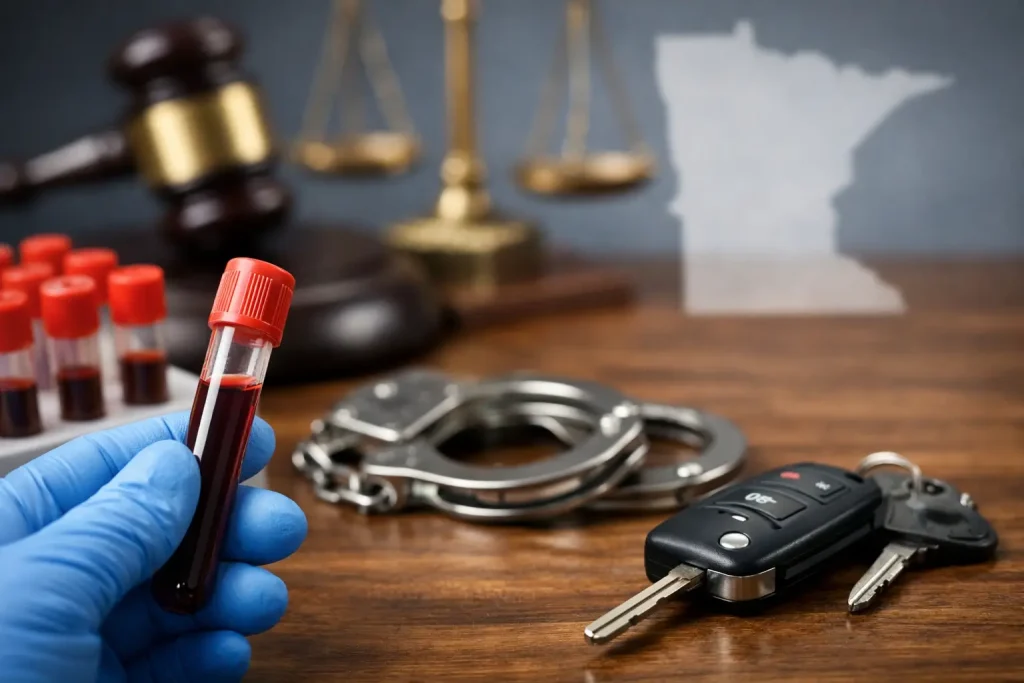
A Minnesota blood test warrant DWI case often begins when a driver is already frightened, handcuffed, and hearing words that sound final: “The judge signed it.” But a warrant is not the end of the case. It gives police authority to obtain a blood sample under specific circumstances. It does not erase your constitutional rights, prove impairment, or make the state’s evidence immune from challenge.
If officers say they have a warrant for your blood after a DWI stop or crash investigation, do not physically resist. Remain silent about the facts of the case, ask for a lawyer, and remember what happened as clearly as you can. The details of the stop, arrest, warrant request, blood draw, lab testing, and handling of the sample can all matter.
When Can Police Get a Blood Test Warrant in Minnesota?
A blood draw is a search under the Fourth Amendment and the Minnesota Constitution. Police generally need a valid warrant before taking blood from a person who does not consent. To obtain one, an officer must present sworn facts establishing probable cause that the person drove, operated, or was in physical control of a motor vehicle while impaired or over a legal alcohol concentration limit.
Those facts may include alleged poor driving, the odor of alcohol, admissions, field sobriety test observations, statements from witnesses, a preliminary breath test result, the presence of drugs or paraphernalia, or circumstances surrounding a crash. For suspected drug DWI cases, officers may rely heavily on their observations, a drug recognition evaluator’s opinion, or evidence that a driver had access to cannabis, prescription medication, or another controlled substance.
A judge reviews the warrant application, often electronically and sometimes late at night. The judge’s signature authorizes law enforcement to seek the blood sample, but the warrant must still be supported by probable cause and executed lawfully. A signed document is not a shield against scrutiny.
A Warrant Is Different From Implied Consent
Minnesota’s implied-consent law and a criminal search warrant are related, but they are not the same process. Under implied consent, an officer may request a chemical test after making a lawful DWI arrest and following required procedures. A driver’s response to that request can trigger separate license-revocation consequences, including a test-refusal allegation in some circumstances.
A warrant, by contrast, is court authorization for a search. Officers may seek one after a person declines testing, when they investigate a serious injury or fatal crash, or when they believe blood testing is needed to investigate suspected alcohol or drug impairment. The legal consequences depend on the facts, the advisories given, the type of test requested, and the reason officers pursued a warrant.
Do not assume that agreeing to a blood draw ends the license issue, or that refusing a test request makes a warrant impossible. These cases can involve parallel criminal and driver’s-license proceedings, each with separate deadlines and defenses.
What Happens After a Minnesota Blood Test Warrant Is Signed?
After a judge signs the warrant, officers typically transport the person to a hospital, clinic, jail, or other location where a qualified person can perform the draw. Minnesota law generally requires blood to be withdrawn by a physician, registered nurse, medical technician, or other qualified person acting under appropriate medical supervision.
The sample is labeled, sealed, and sent for analysis. In an alcohol case, the state may test blood alcohol concentration. In a drug-related DWI investigation, testing may look for active controlled substances, metabolites, or prescription medications. That distinction matters. The presence of a substance does not automatically prove that it impaired driving at the relevant time.
Blood testing can be powerful evidence, but it is not magic. A result needs context. The prosecution must still connect the result to driving, establish the reliability of the testing process, and prove its case beyond a reasonable doubt in criminal court.
Do You Have to Comply With a Blood Warrant?
You should not physically fight, flee, or interfere with officers executing a warrant. Resistance can create new allegations and increase the danger in an already volatile moment. State clearly that you do not consent if that is true, ask to speak with counsel, and do not make statements about drinking, drug use, driving, or the events under investigation.
Police may use reasonable means to execute a valid warrant, and forced blood draws raise serious concerns that depend on the circumstances. The best place to fight the legality of the search is through a focused legal defense, not at the roadside, in a squad car, or in a hospital room.
If you are medically vulnerable, tell medical personnel about relevant conditions, medications, bleeding disorders, allergies, or other immediate health concerns. Protecting your health does not require you to answer investigative questions.
How Can a Blood Warrant Be Challenged?
The state bears the burden of defending a challenged search. An experienced DWI defense attorney will not simply look at the final lab number. The investigation must be examined from the first emergency lights through the laboratory report.
A defense may question whether the traffic stop was lawful in the first place. Police need a legal basis to stop a vehicle, unless another recognized exception applies. If the stop was unlawful, evidence obtained afterward may be subject to suppression.
The warrant affidavit also deserves close review. Did it contain concrete facts supporting probable cause, or did it rely on vague conclusions? Did the officer omit material information, such as a medical condition that could explain apparent impairment, poor weather, a sober explanation for driving behavior, or problems with field sobriety testing? Did the warrant describe the search with sufficient particularity?
Execution matters as well. A warrant may have time limits and instructions about the sample to be taken. The draw must be conducted reasonably, by an authorized person, and in a medically acceptable manner. The state’s chain of custody must show what happened to the sample from collection through testing. Gaps, labeling errors, contamination concerns, or unexplained delays can weaken the evidence.
Finally, the lab work itself may be tested. Calibration records, quality-control procedures, analyst qualifications, retesting, sample preservation, and the scientific meaning of a result can all become issues. In cannabis and prescription-medication DWI cases especially, toxicology may show exposure without answering the central question: Was the driver impaired at the time of driving?
Your License May Be at Risk Before Court
A DWI arrest can trigger an immediate driver’s-license revocation or cancellation process separate from the criminal charge. The notice you receive may impose a short deadline to seek judicial review. In many implied-consent cases, the petition deadline is 60 days after receiving notice of revocation.
That deadline can arrive while you are still trying to understand the arrest, arrange transportation, or protect your job. Do not wait for a criminal court date to address your driving privileges. The right strategy may involve challenging the revocation, seeking limited driving privileges when available, or preparing for the requirements that apply to your specific record and allegations.
What to Do After a Warrant Blood Draw
Write down everything you remember while the timeline is fresh: why you were stopped, what officers said, whether you were read an advisory, requests for testing, how long events took, who drew your blood, and any medical issues you raised. Preserve paperwork, tow receipts, release documents, citations, and notices about your license.
Do not discuss the case on social media, in text messages, or with people who were not present. Do not try to explain away the incident to police after release. Seemingly harmless statements can become evidence the state uses to fill gaps in its case.
A blood warrant can feel like the legal storm has already closed in. It has not. A careful defense can test every layer of the state’s case and protect the ground that matters most: your freedom, your license, your record, and your future.
Pingback: Minnesota Implied Consent Hearing Guide for Drivers – Refuge Defense