
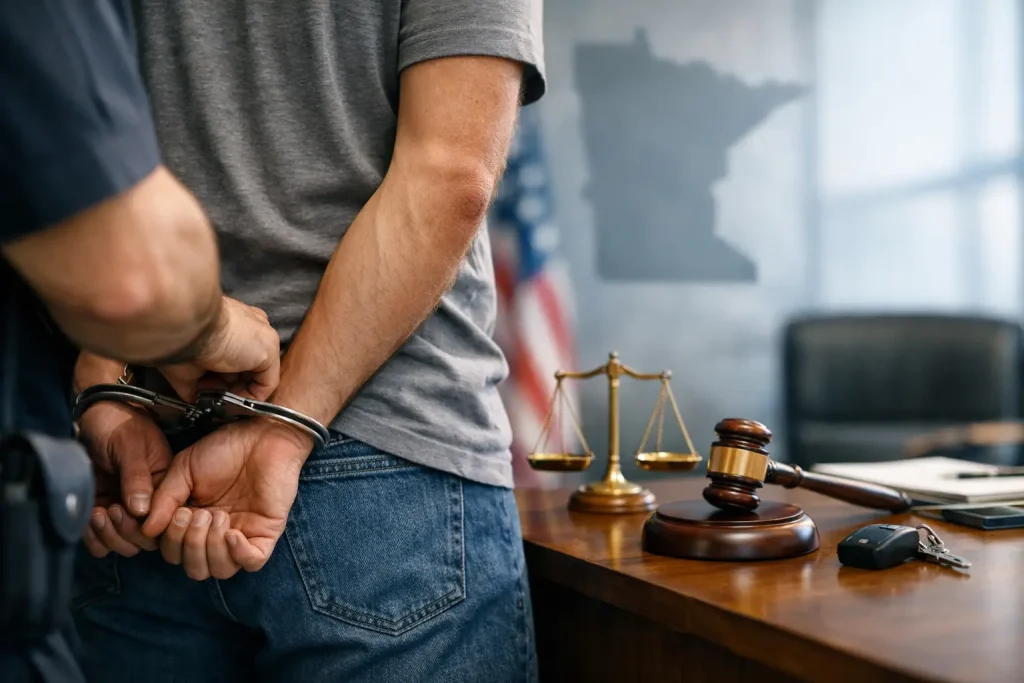
An arrest can turn one bad night into a legal storm before you have had time to call home. If you are searching for what to do after arrest Minnesota, focus first on protecting your rights, preserving your options, and avoiding decisions that make the state’s job easier. You do not have to solve the entire case from a holding cell. You do need to take the next right step.
What to Do After an Arrest in Minnesota: Protect Yourself First
Your first priority is simple: remain calm and remain silent about the allegations. Police officers may sound conversational, sympathetic, or certain they already know what happened. None of that changes the risk of explaining, apologizing, guessing, or trying to talk your way out of the arrest.
You can clearly say: “I want to remain silent. I want to speak with an attorney.” Then stop discussing the facts. Do not fill quiet moments with details. Do not debate the officer’s version of events. Do not call friends or family from jail and discuss what happened as though the call is private. Jail calls are commonly recorded and can become evidence.
This does not mean being hostile or refusing basic booking procedures. Stay respectful, follow lawful instructions, and provide identifying information when required. But do not volunteer a timeline, an explanation, names of potential witnesses, passwords, or consent to searches without legal advice.
If your arrest involves DWI or chemical testing
DWI arrests create urgent issues separate from the criminal charge. Your driver’s license can be at risk through Minnesota’s implied-consent process, even while the criminal case is still pending. A notice of revocation may trigger a limited window to seek judicial review. In many situations, the deadline is 60 days after receiving notice. Missing it can mean losing an important opportunity to challenge the revocation.
The decision about a breath, blood, or urine test can carry serious consequences. Minnesota law and the facts of the stop, arrest, advisory, and testing process all matter. If you are given a reasonable opportunity to consult an attorney before deciding, use it. Do not assume a refusal is safer than testing, or that testing means there is no defense. Alcohol, cannabis, prescription medication, and alleged drug impairment cases each raise different factual and scientific questions.
Write down everything you remember as soon as you can: why you were stopped, what officers said, when you last ate or drank, any medications you take, when testing occurred, and whether you requested counsel. Small details can become major issues later.
Understand Release Conditions Before You Leave
Being released from jail is not the same as being free of the case. You may be released on your own recognizance, required to post bail, or placed under conditions set by a judge. Read every document you receive. Conditions can include no contact with a named person, no alcohol or controlled substances, no possession of firearms, GPS monitoring, travel restrictions, or requirements to appear for testing or court.
Take those conditions literally. A no-contact order can prohibit calls, texts, social-media messages, messages sent through another person, and showing up at a shared residence or workplace. In domestic violence and protective-order matters, even a well-intended attempt to apologize or explain can lead to a new allegation.
If a condition creates a real problem, such as preventing access to your home, children, medication, or work equipment, do not ignore it. An attorney can evaluate whether a request to modify the condition is appropriate. Until a judge changes the order, comply with it.
Get the Paperwork and Calendar Every Date
Before you leave custody, gather the paperwork you are given. It may include a citation, complaint, bail or release order, court date, driver’s-license revocation notice, property receipt, and instructions about testing or supervision. Photograph or scan the documents and store copies somewhere secure.
Your first hearing may be called an arraignment, first appearance, or Rule 5 hearing. The court may address the charges, your right to counsel, future court dates, bail, and conditions of release. Missing court can lead to a warrant, forfeited bail, and a far more difficult path forward.
Put every deadline into a calendar immediately, with reminders several days ahead. Do not rely on a text from the court, a family member’s memory, or the assumption that someone will call you. The state moves on its schedule. Your defense must be ready before that schedule closes doors.
Preserve Evidence Without Trying to Build Your Own Case Online
After an arrest, evidence can disappear quickly. Surveillance video may be overwritten. Phones get replaced. Witness memories fade. Preserve what you can without contacting protected people, witnesses, or alleged victims about their testimony.
Save relevant texts, call logs, photos, location data, receipts, medical records, work schedules, and social-media messages. Keep the original files when possible. Make a private timeline of the day or incident while your memory is fresh, including names of people who saw key events. If there may be video from a business, apartment building, vehicle, or nearby camera, tell your attorney quickly so preservation efforts can begin.
Do not delete posts, messages, photos, or app data because they look bad. Destruction can create a separate problem and may be interpreted as consciousness of guilt. Do not post about the arrest, accuse anyone online, or ask others to remove material. Silence applies online, too.
Speak With a Minnesota Criminal Defense Attorney Early
The days after arrest are not merely paperwork and waiting. They are often when critical decisions are made about charging, release conditions, testing challenges, evidence preservation, and the defense theory. Early counsel can also prevent a client from making harmful statements while trying to fix the situation alone.
A strong defense is not built from a police report alone. It may require examining whether officers had a lawful basis for a stop, seizure, search, arrest, or test request. It may involve challenging the reliability of a field sobriety test, chemical test, witness account, identification procedure, body-camera recording, digital evidence, or claimed impairment. In a domestic assault or violent-crime case, the full context, prior communications, injuries, self-defense evidence, and independent witnesses may matter greatly.
Be candid with your attorney. The facts that worry you most are often the facts that need strategic attention first. Attorney-client communications are protected, and your lawyer cannot defend you effectively from a filtered version of events.
Do Not Let the Arrest Control the Rest of Your Life
An arrest can threaten employment, professional licensing, immigration status, housing, driving privileges, firearm rights, family relationships, and your reputation. The proper response is not panic. It is disciplined action.
Avoid discussing the case with coworkers or posting a public explanation. If an employer asks about an immediate scheduling or licensing issue, get legal advice before giving a detailed account. If you have children or a family-court matter, follow every existing order and avoid using the criminal case as a reason to violate parenting-time rules.
You should also care for the practical parts of your life. Arrange transportation if your license is affected. Make sure bills, medications, childcare, and work responsibilities are covered. An arrest creates pressure, and pressure causes mistakes. Build a small circle of trusted support, but keep case details between you and your lawyer.
Your Next Call Can Change the Direction of the Case
The charge on a booking sheet is not a verdict, and an arrest is not the end of your freedom or future. But the period immediately afterward matters. Protect your silence, follow release conditions, preserve evidence, track deadlines, and seek counsel before you make another high-stakes decision.
When the state brings its power to bear, you deserve a shield that sees more than the accusation. Refuge Defense can help you assess the ground beneath your feet and take the next step with purpose.
Pingback: What Happens at a Minnesota Order for Protection Hearing – Refuge Defense