
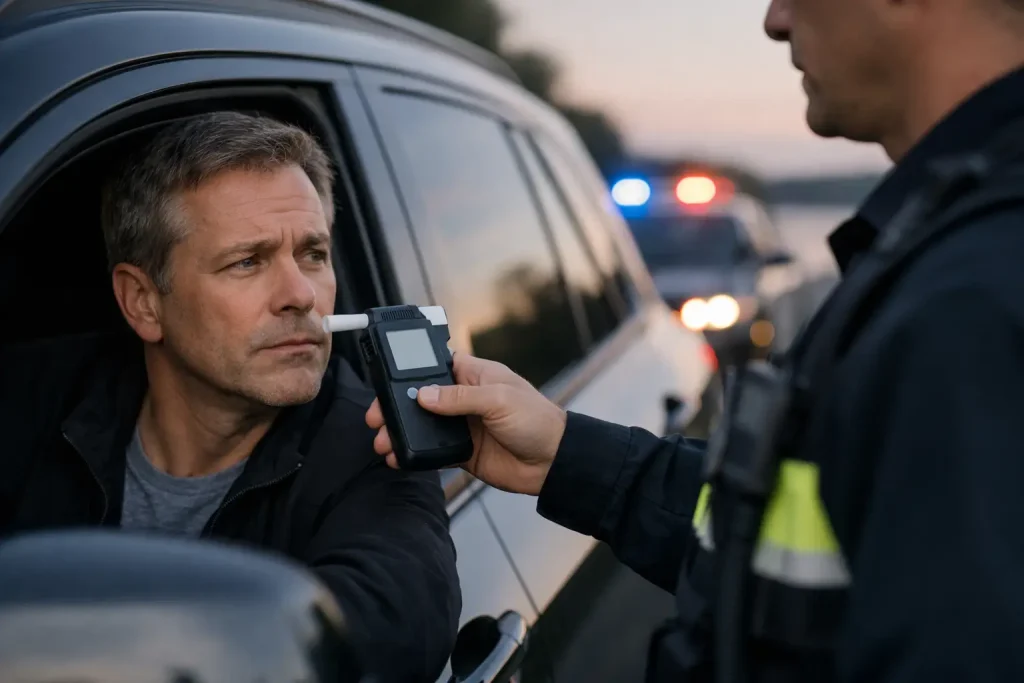
A Minneapolis traffic stop can turn into a DWI investigation in minutes: lights in the mirror, questions about where you have been, then a request to blow into a device. Can you refuse a breath test Minnesota? The answer depends on which breath test an officer is requesting. That distinction can affect your license, a possible criminal charge, and the defense available to you.
Do not make this decision based on a friend’s story, a social-media post, or the belief that refusing means the state has no case. Minnesota has separate rules for roadside screening and the evidentiary chemical test requested after an arrest. The pressure is real, but so are your rights.
Can You Refuse a Breath Test in Minnesota?
You can physically decline to provide a breath sample, but refusal may carry serious legal consequences. The key question is whether the officer is asking for a preliminary breath test at the roadside or an evidentiary breath test under Minnesota’s implied-consent law after arrest.
A refusal is not the same thing as a successful defense. It can give the state another theory to pursue, trigger a license revocation, and in the case of an evidentiary breath test, potentially lead to a separate criminal refusal allegation. Still, the fact that someone refused does not erase the state’s burden to prove that the stop, arrest, advisory, and testing request were lawful.
Roadside PBT Versus the Post-Arrest Chemical Test
The roadside preliminary breath test
During a DWI investigation, an officer may request a preliminary breath test, often called a PBT. This is the small handheld device commonly used at the roadside. It is a screening tool, not the formal evidentiary test normally used to establish a specific alcohol concentration in court.
Minnesota law can impose a penalty for refusing a properly requested PBT. A roadside refusal may also become part of the officer’s probable-cause narrative. In practical terms, refusing a PBT does not necessarily prevent an arrest. The officer may rely on driving conduct, odor of alcohol, statements, balance tests, body-camera footage, witness accounts, and other observations.
That does not mean every PBT demand is automatically valid. A defense attorney should examine why the stop occurred, what the officer observed, whether the request was authorized, and whether the report accurately describes what happened.
The evidentiary breath test after arrest
The stakes rise after an arrest. At the police station, jail, or testing location, an officer may read Minnesota’s implied-consent advisory and request an evidentiary chemical test. For alcohol-related DWI cases, that is often a breath test on a larger instrument.
Minnesota generally treats driving as consent to chemical testing when the statutory requirements are met. If you refuse a requested post-arrest breath test, the officer can report a test refusal to the Department of Public Safety. The state may revoke your driving privileges, and breath-test refusal can also result in a criminal charge.
A refusal case is not merely a license matter. Depending on your record and the facts alleged, a DWI or refusal case can expose you to misdemeanor, gross misdemeanor, or felony-level consequences. Prior impaired-driving incidents, a high alcohol concentration, children in the vehicle, an accident, and other aggravating circumstances can change the stakes quickly.
What You Should Do When the Advisory Is Read
Once the implied-consent advisory is being read, the moment is time-sensitive. Listen closely. The officer should tell you that Minnesota law requires you to take a test, that refusal may be a crime, and that you have the right to consult with an attorney before deciding.
Ask to speak with an attorney. In Minnesota, a person generally has a limited right to consult counsel before deciding whether to submit to chemical testing. This is not a license to delay the process indefinitely. Officers must provide a reasonable opportunity to contact counsel, while testing must occur within a timeframe that can still produce meaningful results.
Use that call wisely. State your location, say that you have been arrested for DWI, identify the test requested, and ask for immediate advice. Do not use the call to debate the officer, invent explanations, or discuss the amount you drank. Remain calm and avoid volunteering facts about drinking, cannabis use, medications, or your driving.
If an officer says you refused, do not physically resist or argue your way into additional charges. Ask what test was requested and make clear, if true, that you wanted to consult counsel or were unable to provide a sample for a medical reason. Details matter later. Your demeanor, exact words, the officer’s instructions, and the timing of events can all become evidence.
Why Refusal Is Not Always a Simple Choice
People often assume a refusal is safer because it keeps a number off the record. Sometimes a test result can be powerful evidence for the state. But refusal has its own risks, especially where the state can prove a valid request for an evidentiary breath test and a clear refusal.
Conversely, a test result does not automatically prove guilt. Breath-testing cases may raise questions about the traffic stop, the arrest, the advisory, the observation period, the instrument’s operation, sample validity, and whether the reported result reflects driving impairment at the relevant time.
The right decision in the moment depends on facts you may not fully know while sitting in a squad car. That is why the right to call an attorney matters. It gives you a brief chance to make an informed decision rather than a panicked one.
This distinction is especially significant in drug-impaired driving investigations. A breath test measures alcohol, not THC, prescription medication, or other drugs. An officer may pursue a different type of chemical test in a suspected cannabis or drug DWI case, and the constitutional and procedural questions can be different. Do not assume that a breath-test rule resolves every chemical-test issue.
A Refusal Does Not End the State’s Case
The state can try to build a DWI case without a breath result. Prosecutors may point to alleged poor driving, field sobriety tests, body-camera video, squad video, admissions, officer observations, accident evidence, and the refusal itself.
But the defense has ground to examine as well. Was the initial stop supported by a lawful reason? Did the officer have probable cause to arrest? Was the implied-consent advisory properly delivered? Did you receive a meaningful opportunity to contact counsel? Were your words or actions fairly characterized as a refusal? Was there a genuine inability to provide a sample rather than a deliberate refusal?
Those are not technicalities. They are constitutional and statutory guardrails against government power. A carefully investigated case can reveal gaps between a police report and video evidence, or between an accusation and what the law actually permits.
Protect Your License Within 60 Days
A test refusal can begin an administrative license-revocation process separate from the criminal court case. You may receive a notice and order of revocation along with temporary driving privileges or information about your license status. Do not set that paperwork aside because you have a court date.
Minnesota generally gives drivers 60 days from the notice and order of revocation to seek review. Missing that deadline can close off a critical opportunity to challenge the revocation. A Department of Public Safety review and a district-court challenge can involve different procedures, so prompt legal advice is essential.
Save every document. Write down the stop location, the time of arrest, when the advisory was read, whether you requested counsel, who you called, and what happened during the testing process. Preserve names of possible witnesses and do not post about the incident online. A defense is stronger when it begins before memories fade and video evidence disappears.
If you are facing a breath-test refusal allegation in Minneapolis, Saint Paul, Lake Elmo, or elsewhere in Minnesota, move quickly. Refuge Defense can assess the stop, the advisory, the alleged refusal, and the threat to your license and freedom. You are more than an accusation, and a charge does not get the final word over your future.
Pingback: Prescription Drug DWI Guide for Minnesota Drivers – Refuge Defense
Pingback: Should I Answer Police? Minnesota Rights Explained – Refuge Defense