
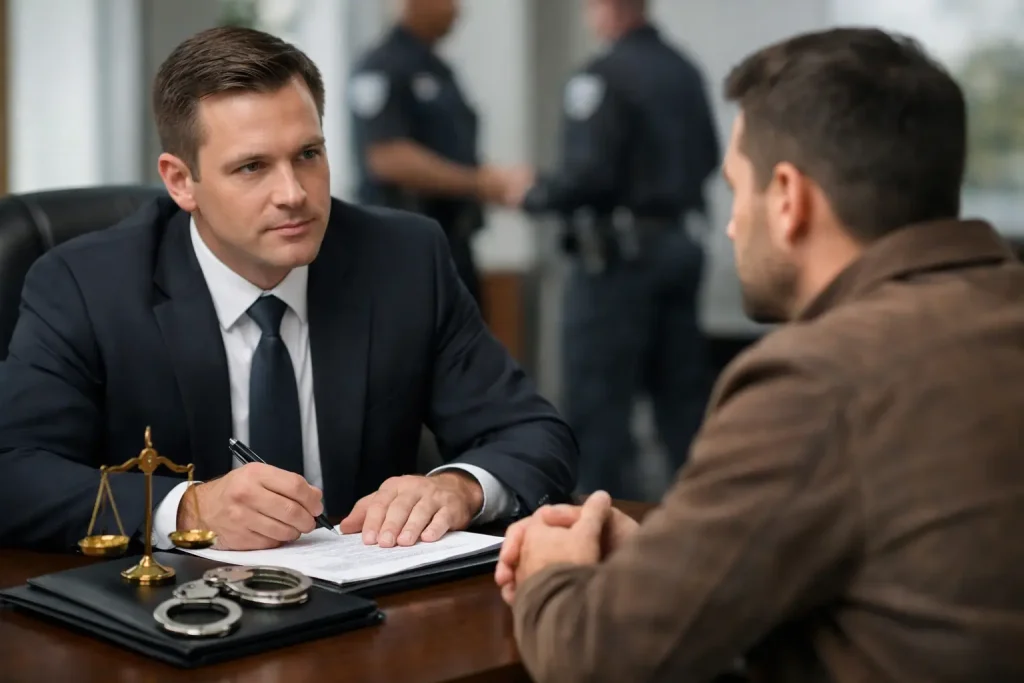
The paperwork handed to you after a Minnesota DWI arrest may look routine. It is not. A citation, notice of license revocation, and court date can set two separate legal fights in motion – one over your driving privileges and another over the criminal accusation. A Minnesota DUI lawyer helps you respond before critical evidence disappears and deadlines close.
Minnesota law generally calls the offense DWI, even though many people understandably search for a DUI lawyer. Whether police allege alcohol impairment, cannabis use, prescription medication impairment, or another controlled substance, the stakes can reach far beyond a night in jail. Your job, professional license, family responsibilities, firearm rights, insurance costs, and reputation may all be on the line.
The first hours after a DWI arrest matter
After an arrest, stress can make people try to explain their way out of trouble. That instinct is understandable, but it can give the state more evidence to use. Remain silent about the facts of the stop, what you consumed, when you consumed it, and how you felt. You can be respectful, comply with lawful directions, and still decline to answer investigative questions without legal counsel.
Write down what you remember as soon as you can do so accurately. Note where the stop occurred, what the officer said was the reason for it, road and weather conditions, your conversations with law enforcement, the timing of any field sobriety tests, and what happened during chemical testing. Seemingly minor details can become central when the state’s version of events is challenged.
Preserve practical evidence, too. Save receipts, ride-share records, text messages, photographs, and names of people who saw you before or after the stop. Do not edit posts, ask others to change their accounts, or discuss the case on social media. A defense is strongest when it is built on facts, not panic.
A Minnesota DUI lawyer protects two separate cases
Many drivers do not realize that a DWI arrest can trigger both a criminal case and an administrative license revocation. Winning or resolving one does not automatically resolve the other. This is why waiting for the first court appearance can be costly.
When the Department of Public Safety revokes your driving privileges, Minnesota generally gives you 60 days from notice of revocation to file a petition for judicial review. Missing that window may eliminate an important opportunity to challenge the revocation in court. The exact timing and available relief depend on the facts, so do not assume your court date preserves every license-related right.
A lawyer can assess whether you may qualify for limited driving privileges, ignition interlock, or another path to lawful driving while the matter is pending. These options involve rules, costs, and eligibility requirements. For someone who drives for work, transports children, or lives far from public transit, the license case is often as urgent as the criminal charge.
The state must prove more than an arrest happened
An arrest is an accusation, not a conviction. Police reports may sound certain because they are written from the government’s perspective. A focused defense examines whether that story holds up under scrutiny.
The first question is often the stop itself. An officer needs a lawful basis to stop a vehicle, whether the alleged reason is speeding, lane movement, equipment trouble, or another traffic violation. If the stop was unsupported, evidence obtained afterward may be subject to challenge.
Then comes the investigation. Field sobriety tests are not magic truth machines. Medical conditions, age, fatigue, footwear, uneven pavement, poor lighting, injuries, anxiety, and unclear instructions can affect performance. Video footage may show a different picture than the officer’s written description.
Chemical test evidence also deserves close attention. Breath, blood, and urine results are powerful evidence, but each testing method raises different questions about collection, procedure, timing, reliability, laboratory practices, and the connection between a result and actual impairment while driving.
Alcohol, THC, and medication cases are not the same
A number alone does not tell the full story in every impaired-driving case. Alcohol cases often focus on breath or blood alcohol concentration and the events surrounding testing. Cannabis and prescription medication cases can be more complicated because the presence of a substance does not always establish impairment at the time of driving.
A THC case may turn on the officer’s observations, drug-recognition evaluation, blood-testing process, driving conduct, and the scientific limits of the state’s claims. Prescription medications create another difficult area. A person may have a valid prescription and still face an impairment allegation, but lawful possession is not the same question as whether the state can prove impaired driving beyond a reasonable doubt.
These distinctions matter. A defense strategy should fit the substance alleged, the testing method used, and the evidence available. Treating every DWI case as if it were the same can leave important weaknesses in the state’s case untouched.
Refusal allegations require immediate, careful review
Minnesota’s implied-consent law creates high-stakes decisions after an arrest. If police allege that you refused a chemical test, the accusation may bring serious license and criminal consequences. But the word “refusal” can conceal important factual and legal questions.
Did law enforcement provide the required advisory? Was the request clear? Did a medical issue interfere with your ability to provide a sample? Did you ask to speak with an attorney, and were you given a reasonable opportunity to do so? Was the officer authorized to request the particular test under the circumstances?
Do not assume a refusal case is hopeless because an officer used that label. At the same time, do not rely on general advice from friends or old internet posts. The sequence of events, the recorded audio and video, and the specific language used by police can matter greatly.
What an experienced defense investigation looks for
A Minnesota DUI lawyer should not merely read the complaint and wait for a plea offer. The defense must investigate the state’s proof early, especially when video systems overwrite recordings or witnesses become harder to locate.
That investigation may include reviewing squad-car and body-camera footage, dispatch records, jail recordings, calibration and maintenance documentation, test results, laboratory materials, officer reports, and the timeline from driving through testing. It also means comparing what officers wrote with what they actually said and did on video.
A lawyer with prosecution and law-enforcement experience understands how the government builds a case and where assumptions can creep in. That perspective is not about shortcuts. It is about testing the state’s evidence at every point where rights, procedure, and proof intersect.
Do not let fear make the decision for you
A first offense may be charged as a misdemeanor, while prior offenses, aggravating factors, child passengers, high alcohol concentration allegations, license status, or injury-related accusations can raise the consequences dramatically. Some cases involve gross misdemeanors or felonies. The right approach depends on your record, the facts, the evidence, and what matters most to your life.
That may mean fighting an unlawful stop, seeking suppression of evidence, challenging a test, negotiating from a position of preparation, or taking a case to trial. There are trade-offs in every legal decision. A lawyer should explain them plainly, not pressure you into a path you do not understand.
Take action before the legal storm gains ground
Bring every paper you received to a confidential case evaluation, including the citation, temporary license, notice of revocation, bail paperwork, and any testing documents. Be honest about prior offenses, medications, substance use, and every interaction with police. Your defense team can protect you only when it has the complete picture.
A DWI allegation does not define your character or dictate your future. It is a moment when you need a shield between you and the full power of the criminal-justice system. Refuge Defense stands ready to examine the facts, confront the state’s proof, and help you make clear decisions while there is still time to protect what matters most.