
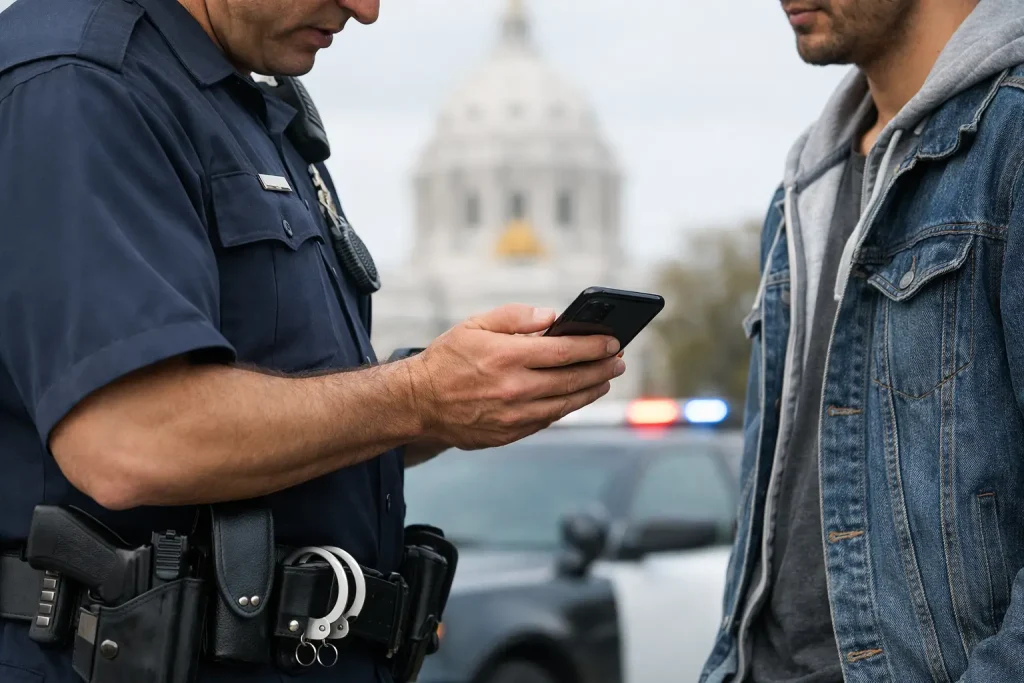
Your phone may hold your messages, location history, photos, banking alerts, medical details, and the private conversations that explain your life. When an officer takes it during a traffic stop or arrest, the question is immediate: can police search your phone just because they have it?
Usually, no. Police can often seize a phone to preserve it as possible evidence, but searching through its digital contents is a different act. In Minnesota and across the country, the Fourth Amendment generally requires law enforcement to get a warrant before examining what is inside a cell phone. That protection matters because a phone is not just another item in your pocket. It is a record of your life.
Still, “generally” is not the same as “always.” Consent, emergencies, warrants, and the facts of the encounter can change the legal analysis quickly. The safest response is calm, clear, and disciplined: do not physically resist, do not volunteer access, and ask to speak with a lawyer.
Can police search your phone without a warrant?
The U.S. Supreme Court has made clear that an arrest does not automatically give police the right to scroll through an arrestee’s phone. Officers may search a person’s pockets for weapons or evidence that could be destroyed, but the immense volume of private digital information on a phone receives stronger constitutional protection.
That means an officer who arrests you for DWI, drug possession, domestic assault, theft, or another alleged offense does not automatically have permission to open your apps, read your texts, review your photos, or search your cloud-linked accounts. They may take the phone from you, secure it, and seek a warrant. But possession of the device is not the same as authority to search it.
A warrant must be supported by probable cause and must describe the evidence officers are allowed to look for. In a drug case, for example, the warrant may seek communications about suspected sales or delivery. It is not supposed to become an unrestricted license to inspect every part of your digital life. Whether a search stayed within the warrant’s scope can become a serious defense issue.
Seizing the phone and searching the phone are different
This distinction is easy to miss during an arrest. If police believe your phone may contain evidence, they may be able to hold it while they apply for a warrant. They may also take steps to prevent remote deletion or alteration of data.
Do not try to destroy the device, erase messages, or direct someone else to do so. That can create separate legal exposure and complicate your defense. Preserving your rights is not about concealing or changing evidence. It is about refusing to give up protections the Constitution already provides.
Consent can change everything
The most common path around the warrant requirement is consent. An officer may ask, “Can I take a look?” or “Will you unlock this for me?” The request can sound casual, especially if you are handcuffed, frightened, or trying to appear cooperative. But consent can open the door to a much broader search than you intended.
You do not need to argue, explain, or accuse the officer of doing something wrong. A simple response is enough: “I do not consent to a search of my phone. I want to speak with a lawyer.” Then remain silent.
Consent must be voluntary, but courts evaluate that question from the surrounding facts. Officers may later claim you agreed through your words or actions. Handing over an unlocked phone, giving a passcode, using Face ID at an officer’s request, or saying “go ahead” can all become important evidence. Be respectful, but be precise.
If you already gave consent, do not assume your case is over. The scope of consent, whether it was voluntary, and what officers actually searched may still be challenged. Tell your attorney exactly what was said, who was present, and whether you felt pressured.
When police may search first and seek a warrant later
There are narrow exceptions to the warrant requirement. The most significant is a true emergency, often called exigent circumstances. Police may claim an immediate search was necessary to prevent imminent harm, locate a person in danger, or address an urgent threat.
These situations are fact-specific. A general fear that someone might delete data is usually not a blank check to search a phone’s contents. Officers can often secure the device and seek judicial authorization. But an active emergency may lead a court to view a limited warrantless search differently.
Other contexts can also affect your privacy expectations. A valid probation or supervised-release condition may authorize certain device searches. Searches at the international border involve different legal rules. School, workplace, and correctional settings may raise additional questions. None of these situations should be treated as automatic surrender of every privacy right. The exact language of an order, condition, or policy matters.
What about a phone found in a car?
A vehicle search does not automatically authorize a phone search. Police may have authority to search a vehicle under certain circumstances, such as with consent, a warrant, or probable cause that the vehicle contains evidence of a crime. But the digital contents of a phone generally remain separately protected.
This matters in Minnesota DWI investigations. Officers may ask to inspect a phone after a crash, when investigating suspected distracted driving, or when trying to build a timeline around alleged alcohol, cannabis, prescription medication, or other drug impairment. A request to see your recent calls, texts, navigation, or social media is still a request to search highly personal digital material. A chemical test or implied-consent advisory does not itself authorize police to search your phone.
Passwords, Face ID, and fingerprints
Whether police can force someone to provide a passcode or unlock a device with a fingerprint or facial scan is a complicated and developing area of law. The answer can depend on the type of court order, the facts officers already know, the device security used, and constitutional protections against compelled self-incrimination.
Do not attempt to solve that legal issue in the back of a squad car. Do not lie about a passcode, make threats, or physically interfere with an officer. State that you do not consent and that you want counsel. Let a defense attorney assess whether a warrant exists, what it permits, and whether any request for access can be challenged.
The same caution applies if an officer asks you to identify the owner of a phone, explain a message, or tell them which account is yours. Those questions can produce statements the state may later use even if the phone itself was never lawfully searched.
What to do when police take your phone
The first minutes after an arrest or stop can shape the rest of the case. Keep your response controlled. You can protect yourself without escalating the encounter.
Say that you do not consent to a search. Ask whether you are free to leave. If you are under arrest or not free to leave, say you want a lawyer and stop answering questions about the phone, its contents, or the allegations. Do not unlock it, provide credentials, or authorize anyone else to access it for police.
As soon as you can safely do so, write down the details: the time and location, officers’ names or badge numbers, what they said, whether they asked for consent, whether they showed you a warrant, and who witnessed the encounter. Save paperwork from the stop, arrest, towing, booking, or property receipt. Small details can reveal whether officers exceeded the limits of consent or a warrant.
If police later execute a phone-search warrant, do not obstruct them. Ask for a copy if one is available, and contact counsel promptly. A skilled defense review looks beyond the question of whether a warrant existed. It examines probable cause, the warrant’s particularity, how data was extracted, whether the search went beyond its authorized scope, and whether statements or evidence should be excluded.
Your phone is not an open book
Police investigations can feel like a legal storm: sudden, forceful, and designed to make you react before you understand the stakes. Your phone may be central to the state’s theory, or it may contain context that protects you from a false or incomplete accusation. Either way, do not surrender your privacy through panic.
A Minnesota criminal defense lawyer can act as a shield between you and an expanding investigation, preserve challenges before evidence disappears, and fight to keep an unlawful search from defining your future. If officers have taken or searched your phone, get legal advice early. Silence, clarity, and timely defense can protect far more than a device.