
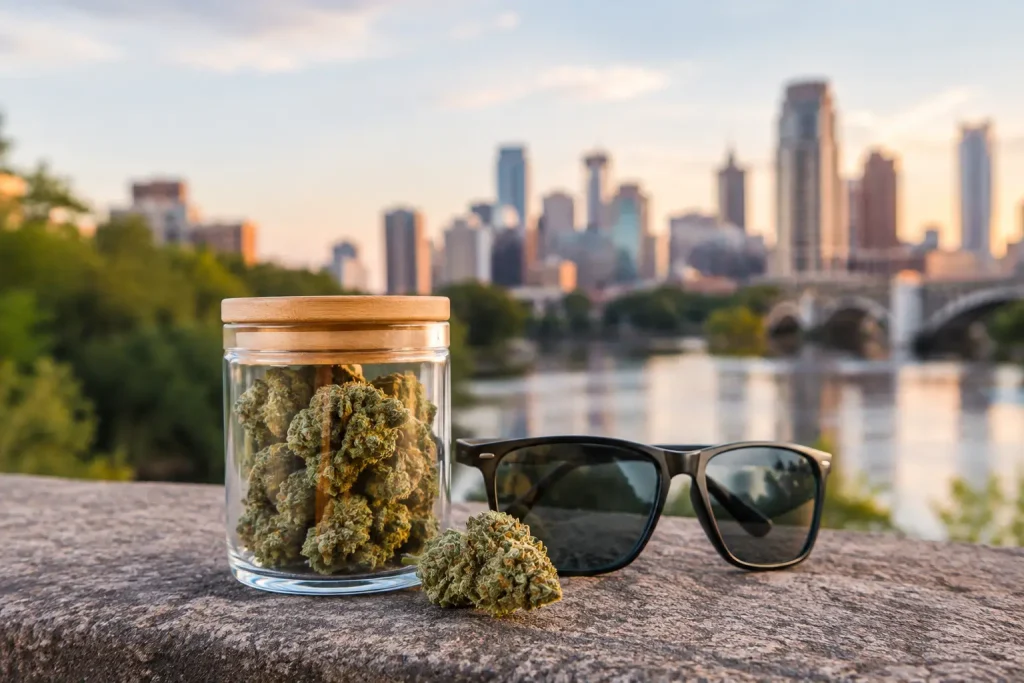
A positive THC result can feel like the end of the road after a Minnesota DWI arrest. It is not. THC presence versus impairment is often the central question in a cannabis-related driving case, and those are not the same thing. A test may show that THC or a cannabis metabolite was in your body. That result does not, by itself, tell a jury exactly when you used cannabis, how much you used, or whether you were unable to drive safely at the time police stopped you.
The state still has a case to prove. Your license, livelihood, record, and freedom should not turn on assumptions dressed up as science.
THC Presence Versus Impairment: The Crucial Difference
THC is the primary intoxicating compound associated with cannabis. It can be detected in blood, urine, and other samples after use. But detection windows and impairment windows are different. The effects that may affect a person’s driving can fade long before a test stops detecting THC or its metabolites, particularly for people who use cannabis regularly.
A urine result is especially limited in this respect. Urine testing commonly identifies metabolites, meaning byproducts left after the body processes THC. Those byproducts may remain detectable well after any acute effects have passed. A urine result may establish prior exposure, but it cannot reliably identify the precise moment of consumption or establish how a person drove at a particular time.
Blood testing can sometimes offer more information about recent exposure, but it is not a stopwatch. THC levels vary considerably based on the person, frequency of use, method of consumption, timing, and the testing process itself. Unlike alcohol, cannabis does not have a simple, universally accepted blood-concentration threshold that proves a person was impaired to drive.
That distinction matters because a Minnesota DWI allegation involving cannabis is generally about impairment. Prosecutors may point to a chemical test, but they frequently rely on the entire investigation: an officer’s observations, driving conduct, statements, field sobriety tests, body-camera footage, and sometimes a drug recognition evaluation. Each piece deserves careful scrutiny.
What Police Observations Can and Cannot Prove
Officers are trained to look for clues they associate with impairment: red eyes, an odor of cannabis, slowed speech, nervousness, poor balance, or trouble following instructions. Yet many of these signs have innocent explanations. Fatigue, allergies, anxiety during a traffic stop, medical conditions, poor lighting, cold weather, and simple confusion can affect how someone looks or performs.
The same caution applies to driving observations. A wide turn, a brief lane touch, delayed response at a light, or an equipment issue may provide police a reason to investigate, but it does not automatically establish drug impairment. Video may tell a fuller story than a report written after the fact. Was traffic heavy? Were road markings faded? Did the officer describe conduct that the squad video does not show?
Field sobriety tests also require context. These roadside exercises were developed largely around alcohol impairment. They can be affected by age, injury, footwear, uneven pavement, weather, language barriers, and the officer’s instructions. Poor performance is not a diagnosis. It is evidence that must be evaluated alongside everything else.
A drug recognition evaluator may offer an opinion based on a multi-step examination. That opinion can be influential, but it is not beyond challenge. A defense review may examine the evaluator’s training, whether required procedures were followed, the timing of the examination, medical explanations, and whether the claimed observations actually support the conclusion offered.
The Timeline May Be the Strongest Evidence
Cannabis cases often turn on the timeline. When did the stop occur? When did the officer first observe the alleged driving conduct? When were field tests performed? When was a blood or urine sample collected? What happened between the stop and testing?
A delay matters. The longer the gap between driving and collection, the harder it can be to draw confident conclusions about a driver’s condition at the time behind the wheel. The method of use matters too. Inhaled cannabis and edible products may follow different onset and duration patterns. A careful defense does not rely on generalizations. It examines the evidence tied to the actual person and actual event.
Statements can shape that timeline as well. Saying that you used cannabis “earlier” may sound damaging, but the meaning depends on what “earlier” means, how the question was asked, whether the statement was recorded, and whether the officer documented it accurately. People under pressure often try to be cooperative. That does not mean their words should be stretched into an admission of impairment.
A Positive Result Is Not the Entire Case
The state may have more than one legal theory in a DWI case, and the precise charge matters. Cannabis-related cases can involve claims of being under the influence, claims tied to controlled substances, or allegations involving more than one substance. Alcohol, prescription medication, and cannabis can create different evidentiary issues, even when police group them together in a report.
This is why a positive test should never end the analysis. The questions should become more specific:
- What exactly did the laboratory test identify: active THC, a metabolite, or another substance?
- Was the sample collected, stored, and tested according to required procedures?
- What evidence supposedly shows impaired driving rather than prior cannabis use?
- Do the squad and body-camera recordings support the officer’s written account?
- Are there medical, environmental, or factual explanations for the claimed signs of impairment?
A strong defense investigation can also examine the initial reason for the stop. Police must have a lawful basis to stop or seize a driver. If the stop, search, questioning, or testing process violated constitutional or statutory protections, that issue may affect what evidence can be used.
What to Do After a Minnesota Cannabis DWI Arrest
The hours after an arrest are not the time to explain your way out of the case. Remain silent about the facts of the stop and alleged cannabis use until you have spoken with counsel. Be respectful, provide required identifying information, and do not guess at answers or volunteer a timeline.
Preserve what you can. Write down what you remember while details are fresh: where you were driving, what police said was wrong, what tests were requested, who was present, and whether you have medical conditions or injuries that affected your balance or coordination. Keep paperwork from the arrest, including any notice involving your driver’s license.
Act quickly on the license issue. Minnesota revocation matters can carry short deadlines, and a petition for judicial review may need to be filed within 60 days of the notice and order of revocation. Missing that window can limit options, even while the criminal case is still pending.
Do not assume that refusing a requested test or agreeing to one has only one consequence. The law, the type of test, the advisory given, whether a warrant was involved, and your specific circumstances can all matter. Get legal advice immediately rather than relying on a friend, an online post, or an officer’s interpretation of what will happen next.
Your Future Deserves More Than a Presumption
A THC result may be part of the evidence, but it is not a verdict. In a case where the government claims cannabis impaired your driving, the difference between detectable THC and actual impairment can be the line between a charged accusation and proof beyond a reasonable doubt.
If you are facing a cannabis DWI in Minneapolis, Saint Paul, or the surrounding Minnesota counties, move before deadlines close and evidence disappears. Refuge Defense can assess the stop, testing, officer observations, and license consequences with the urgency your situation demands. Your case is not just a file number. It is your ability to drive, work, care for your family, and protect the future you have built.