
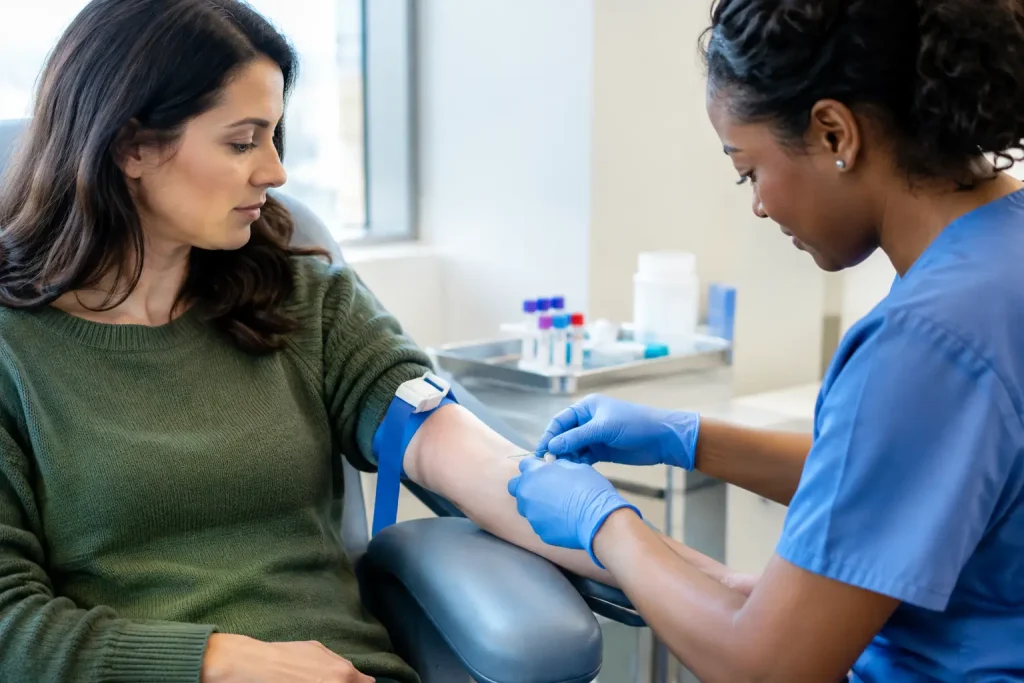
A blood test can feel like the state has found a final answer to a DWI accusation. It has not. Knowing how to challenge blood draw evidence means looking past the laboratory number and examining every decision that put it there: the stop, the arrest, the warrant, the needle, the storage, and the testing. One weak link may matter greatly when your license, job, record, and freedom are on the line.
In Minnesota, a blood draw is an invasive search. Police and prosecutors still must prove they obtained the sample lawfully and that the reported result accurately reflects your blood at the relevant time. A high result on paper does not erase your constitutional rights or the state’s burden of proof.
How to Challenge a Blood Draw in a Minnesota DWI Case
A strong challenge is not a single argument pulled from a form. It is a careful investigation. The defense should obtain and scrutinize the police reports, squad and body-camera video, dispatch records, warrant materials, hospital or clinic records, laboratory documents, and every record showing who handled the vial.
The core questions are straightforward: Did police have a lawful reason to stop and arrest you? Did they have legal authority to take blood? Was the draw performed properly? Can the state prove the sample was yours, was protected from contamination, and was tested through reliable methods? The answer depends on the facts, not on an officer’s confidence or a prosecutor’s assumptions.
Start with the stop and arrest
A blood result may be excluded if it grew from an unlawful stop, detention, or arrest. An officer needs a valid legal basis to stop a vehicle. A hunch is not enough. Common claimed reasons include lane violations, speeding, equipment issues, or driving behavior, but video may tell a different story.
The same scrutiny applies after the stop. Did officers extend the encounter without adequate grounds? Did field sobriety testing occur under conditions that made it unreliable, such as ice, poor lighting, injury, disability, fatigue, or improper instructions? Did the facts actually establish probable cause for arrest? If the foundation fails, evidence collected afterward may be vulnerable.
Examine the warrant or claimed exception
Police generally need a warrant to take blood in a DWI investigation unless a recognized exception applies. A judge must issue a warrant based on probable cause, and the application must truthfully and sufficiently explain why blood evidence is likely to reveal a crime.
A defense attorney can examine whether the affidavit omitted significant facts, overstated observations, relied on stale information, or failed to establish probable cause. Timing matters too. A warrant signed after a sample was already taken is not a technicality. It may be a constitutional problem.
Sometimes the state argues consent instead of relying on a warrant. Consent must be voluntary under the full circumstances. What did the officer say? Was the person handcuffed, injured, medicated, exhausted, or pressured? Were they told they could refuse? The exact words, recordings, and surrounding conditions matter.
There are limited situations where the state may claim an emergency justified acting without a warrant. That is not a shortcut available simply because alcohol or drugs metabolize over time. The government must show the circumstances truly made obtaining a warrant impracticable.
The Blood Draw Must Be Performed Correctly
Even a lawful warrant does not give the state permission to collect blood carelessly. Minnesota law requires blood to be drawn by an authorized person, such as qualified medical personnel, using accepted medical practices. The procedure should be documented well enough to show who performed it, where it occurred, and how the sample was identified and preserved.
A defense investigation may focus on whether the person drawing the blood was qualified, whether the site and procedure were appropriate, and whether the vial was properly labeled. Missing initials, inconsistent times, incomplete records, or uncertainty over which vial belongs to which person can undermine the state’s proof.
Contamination is another concern. For alcohol testing, the collection process should avoid products or conditions that could affect the sample. For drug-impaired driving allegations, the questions may extend to the type of test ordered, the substances tested for, and whether the laboratory method can reliably identify and quantify the reported compound.
This does not mean every paperwork mistake defeats a case. Courts often distinguish between a harmless clerical error and a failure that creates real doubt about the evidence. But the state does not get to call a gap harmless before it is investigated.
Attack the Chain of Custody and Lab Result
The vial does not travel from an arm to a final report by itself. Prosecutors must be able to account for the sample from collection through transport, receipt, storage, testing, and reporting. A broken or poorly documented chain of custody raises a basic question: Can anyone be sure the tested sample was the same blood taken from you?
Records should reveal when the blood was sealed, who transferred it, where it was stored, and when the laboratory received it. Temperature controls and storage conditions can be relevant, particularly if there was a delay. A vague statement that procedures are “usually” followed is not always enough when records are absent or conflict.
Laboratory testing deserves equal scrutiny. A reported number is the output of a process run by people and instruments. The defense may review the lab’s standard operating procedures, analyst training, instrument maintenance, calibration, quality-control results, batch data, and the analyst’s notes. An analyst may make a transcription error, an instrument may flag a problem, or a quality-control result may expose concerns that a short lab report never mentions.
For controlled substances, presence is not the same as impairment. Some drugs and cannabis metabolites can remain detectable after their impairing effects have passed. A blood test can be powerful evidence, but it does not automatically prove how a person was driving or whether a substance caused impairment at the time of operation.
Timing Can Change What the Result Means
The time between driving and the blood draw can be central. Alcohol concentration can rise or fall depending on absorption, food intake, drinking pattern, body chemistry, and other factors. If blood was taken long after the stop, the result may not establish the concentration at the time the vehicle was driven without additional analysis.
The state may try to use retrograde extrapolation, an opinion estimating a prior alcohol concentration. That opinion rests on assumptions. When did drinking stop? Was alcohol still being absorbed? Is there enough reliable information to make the calculation meaningful? An expert cannot turn missing facts into certainty merely by using scientific vocabulary.
Protect the License Case as Well as the Criminal Case
A DWI blood draw can trigger more than a criminal charge. Test results, alleged refusals, and related conduct may lead to an administrative driver’s license revocation or cancellation. That process can move quickly and is separate from the criminal case.
In Minnesota, a petition seeking judicial review of a license revocation generally must be filed within 60 days after receiving notice. Missing that deadline can close off a meaningful opportunity to challenge the revocation, even if the criminal case is still pending. Do not assume a future court date protects your driving privileges now.
Preserving evidence is urgent as well. Squad video can be overwritten. Witness memories fade. Medical records, warrant documents, and laboratory materials should be requested early, before the state controls the narrative.
What to Do After a Blood Draw
Do not try to explain the test result away to police, prosecutors, employers, or on social media. Statements made while frightened often become evidence the state uses against you. Write down what you remember for your attorney: the reason given for the stop, the timing of events, what officers said about testing, medications or medical conditions, who drew the blood, and any witnesses.
Keep every document you received, especially a notice concerning license revocation. Then speak with a Minnesota DWI defense lawyer promptly. A qualified defense team can evaluate the legal authority for the draw, pursue the records behind the result, and identify whether the state’s case rests on proof or presumption.
You are more than a lab number. When the government takes your blood and builds a case around it, you deserve a defense that examines every inch of the state’s path before it asks a court to take anything else from you.