
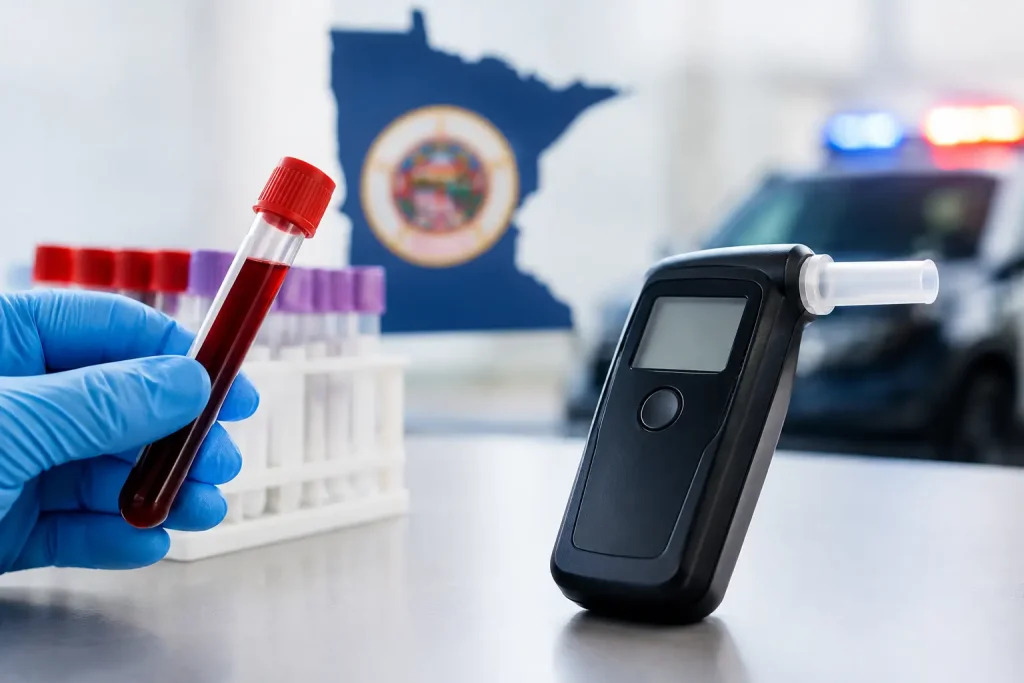
A blood test versus breathalyzer can become the center of a Minnesota DWI case within hours of an arrest. One result may threaten your driver’s license, your job, your freedom, and your reputation. But a chemical-test number is not a verdict. It is evidence gathered by people, machines, procedures, and laboratories – all of which must withstand scrutiny.
If police arrested you for suspected impaired driving, do not assume a blood result is unbeatable or that a breath result tells the whole story. The type of test matters. So does the timing, the collection process, the officer’s conduct, and whether the state can prove the result actually reflects your condition while you were driving.
Blood Test Versus Breathalyzer: What Is the Difference?
A breathalyzer, more accurately called an evidentiary breath test in a Minnesota DWI case, estimates alcohol concentration by measuring alcohol in a person’s breath. Minnesota law enforcement commonly uses an approved breath-testing instrument after an arrest. The machine analyzes breath samples and converts that measurement into an alcohol-concentration result.
A blood test measures substances in a drawn blood sample. It may be used to test for alcohol, controlled substances, cannabis metabolites, prescription medications, or other drugs. Unlike an evidentiary breath test, a blood test can potentially reveal the presence of drugs. Breath testing generally cannot.
That difference has real consequences. In an alcohol-only allegation, the state may rely on a breath result to claim a per se alcohol-concentration violation. In a drug DWI case, prosecutors often lean heavily on blood evidence, along with driving conduct, officer observations, field sobriety exercises, and statements made during the stop.
Neither testing method answers every question. A breath test does not directly measure blood alcohol concentration. A blood test may detect a substance without proving that it caused impairment at the time of driving.
Why the Test Type Can Change the Defense
The state has the burden to prove its case. That burden does not disappear because a machine printed a number or a laboratory issued a report.
Breath testing raises questions about the machine, its maintenance, its operation, the observation period before testing, the quality of the breath samples, and the timing of the test. Alcohol concentration can rise or fall over time. If testing occurred well after the vehicle stop, the result may not neatly establish what your alcohol concentration was when you were behind the wheel.
Blood testing creates a different chain of issues. The defense may examine who drew the blood, whether the draw and storage followed required procedures, how the sample was labeled, whether the chain of custody is complete, the laboratory’s testing method, and whether the analyst can explain the reported result. Contamination, handling mistakes, reporting errors, and unexplained gaps in documentation can matter.
For drug allegations, the science often requires even closer attention. A positive blood result does not automatically prove impairment. Some substances or metabolites can remain detectable after their impairing effects have ended. Cannabis cases can be especially complex because there is no simple blood number that proves present driving impairment in the same way Minnesota uses alcohol concentration thresholds.
A Preliminary Breath Test Is Not the Same as a Breathalyzer
Drivers often use the word breathalyzer to describe every roadside breath device. Minnesota law treats these tests differently.
A preliminary breath test, or PBT, is usually administered at the roadside before arrest. Officers may use it as one piece of information when deciding whether probable cause exists for an arrest. It is not the same as the later evidentiary breath test requested under Minnesota’s implied-consent procedures.
The evidentiary test is the one that can trigger serious administrative and criminal consequences. It may be a breath, blood, or urine test, depending on the circumstances and the officer’s request. The distinction matters because the legal rules, admissibility questions, and consequences may be different.
Can You Choose Between a Blood Test and a Breath Test?
Usually, the officer determines which chemical test to request. A driver cannot simply demand a preferred state-administered test because one option seems less risky. Yet the officer’s selection and the circumstances surrounding it can still be important in a defense.
Minnesota’s implied-consent process is also not a casual request. After arrest, an officer may read a chemical-test advisory. You may have a limited right to consult with an attorney before deciding whether to test, provided exercising that right does not unreasonably delay the testing process. What you say, what the officer says, whether you were given a meaningful opportunity to call counsel, and the exact timing can all become critical.
Minnesota law generally allows a person who submits to testing to obtain an additional chemical test by someone of their own choosing. That right is not self-executing. You need to clearly assert it, and the circumstances must permit it. If police unreasonably interfere with a timely independent test, that may affect the case.
A refusal can carry severe consequences of its own, including license revocation and possible criminal charges. A blood draw also raises constitutional questions. Police generally need valid consent, a warrant, or a recognized legal exception before obtaining blood. Do not try to solve those questions alone from the back of a squad car. Remain respectful, remain silent about the facts, and ask to speak with an attorney when the advisory is read.
Common Weak Points in Breath Evidence
Breath evidence can look precise because it arrives as a numerical result. Precision is not the same as reliability in every individual case.
A strong defense review may look at whether the required observation period was properly completed and documented. That period is intended to reduce the risk that mouth alcohol, recent consumption, vomiting, belching, or other conditions affected the sample. Medical conditions and physiological factors may also deserve investigation, depending on the facts.
The records behind the machine matter, too. An attorney can assess instrument certification, diagnostic checks, calibration-related records, operator training, and whether the device reported errors during the testing sequence. The question is not whether breath instruments can ever produce reliable results. The question is whether the state can lay a reliable foundation for this result, from this instrument, in this case.
Common Weak Points in Blood Evidence
Blood evidence has an aura of finality that prosecutors may emphasize. Yet blood testing is a process, not magic.
First comes collection. Was the draw performed by a qualified person? Was the correct vial used? Was the site prepared appropriately? Then comes preservation, transportation, storage, and laboratory intake. Each handoff should be documented. A mislabeled sample, unexplained delay, or broken chain of custody can create doubt about whether the reported sample is truly yours and whether it was handled correctly.
Next comes analysis. Laboratories use scientific methods with controls, thresholds, and reporting practices. Those methods can be challenged where appropriate. In a drug case, the defense must also confront the leap prosecutors may try to make from presence to impairment. A medication taken as prescribed, an inactive cannabis metabolite, or a trace amount of a substance does not by itself tell a jury how a person was driving or functioning.
The Clock Starts Before Your Court Date
A chemical test can trigger two fights at once: the criminal case and the loss of driving privileges. In Minnesota, you may have only 60 days from the notice and order of revocation to file a petition challenging the revocation. Missing that deadline can close off an important avenue of defense, even if your criminal case is still pending.
Preserve what you can immediately. Write down what happened during the stop while details are fresh: when you last ate or drank, medications you take, your timeline before driving, what the officer said, whether you requested a lawyer, and whether you asked for an independent test. Do not post about the arrest. Do not explain the incident to friends, coworkers, or investigators. Statements meant to clear things up can become evidence for the state.
A prompt legal review can also seek squad video, body-camera footage, dispatch records, test tickets, advisory recordings, laboratory materials, and maintenance records before evidence disappears or memories fade.
A Number Does Not Get the Final Word
The blood test versus breathalyzer question is not about finding a universally better test. It is about identifying what the state must prove, what the test can actually establish, and where the evidence fails to support the accusation. The answer depends on the substance alleged, the timeline, the testing method, and the conduct of law enforcement from the first stop through the final sample.
When your license and future are under attack, move quickly. A careful defense can begin with the smallest details – a missed observation period, an ignored request for counsel, an unpreserved sample, a flawed blood draw, or a drug result that proves presence but not impairment. Those details can be the ground on which your freedom is protected.