
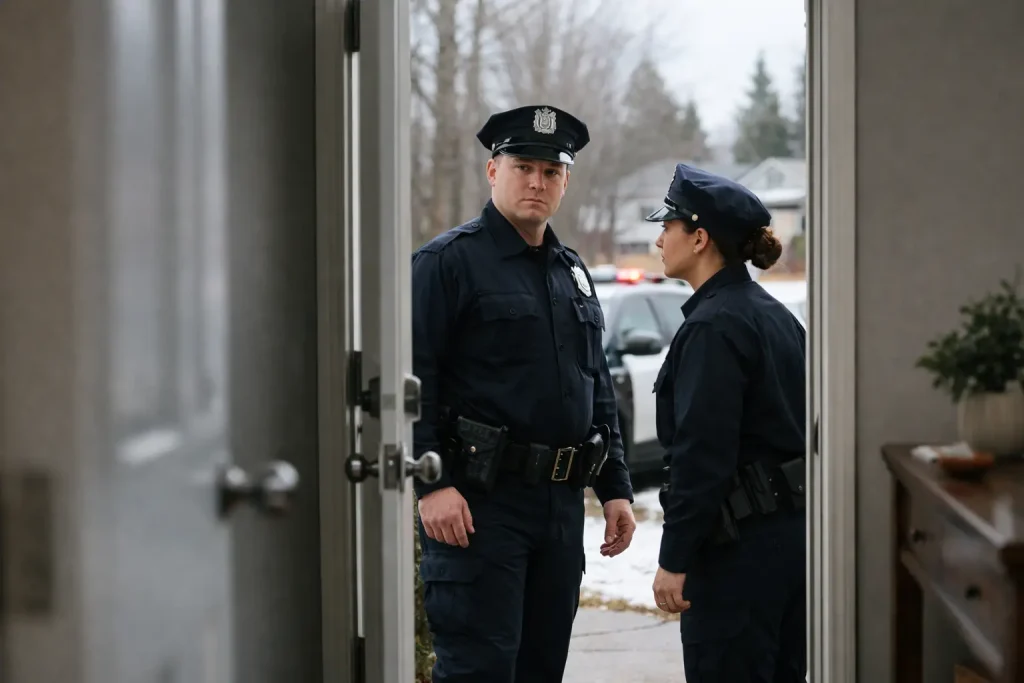
A knock at the door can turn your living room into the center of a criminal investigation in seconds. If you are asking, “can officers enter without warrant,” the short answer is: sometimes, but not simply because they want to talk, investigate a complaint, or believe you may have committed a crime. Your home receives the strongest constitutional protection. Police need legal authority to cross that threshold.
That protection matters when your freedom, family, firearms rights, driver’s license, job, and record are on the line. It also comes with a hard reality: you should not try to physically stop officers from entering. Protect your rights with your words, your silence, and fast legal counsel.
Can Officers Enter Without a Warrant?
Under the Fourth Amendment and Minnesota law, police generally need a warrant to enter and search a home. A judge issues a search warrant after finding probable cause that evidence of a crime will be found inside. This is not a technicality. The warrant requirement puts a neutral judge between you and the power of the government.
But the rule has exceptions. Officers may be able to enter without a search warrant when a person with authority voluntarily consents, when a genuine emergency requires immediate action, or when they are actively pursuing a suspect from a crime scene. The facts matter. A claimed exception is not automatically valid just because an officer says it is.
A police officer at your door may sound confident. That does not mean you must open the door, answer questions, or invite them in. You can speak through the door, ask whether they have a warrant, and clearly state: “I do not consent to any search.”
A Warrant Is Not Always a Search Warrant
People often hear “we have a warrant” and assume officers can search every room, drawer, phone, and vehicle. That is not necessarily true.
A search warrant must identify the place to be searched and the items police are authorized to look for. Its scope matters. If a warrant authorizes a search for a specific firearm, for example, it does not give officers unlimited authority to rummage through areas where that item could not reasonably be found.
An arrest warrant is different. Officers with an arrest warrant may generally enter the named person’s own home if they have a reasonable basis to believe that person is inside. But an arrest warrant for one person does not ordinarily authorize police to enter someone else’s home to find that person. Entering a third party’s residence generally requires a search warrant, consent, or a true emergency.
If officers present a warrant, do not interfere. Ask to see it if doing so is safe, or ask for a copy. Notice the address, date, judge’s signature, and the areas or property described. Your attorney can later examine whether the warrant and the search stayed within constitutional limits.
The Main Exceptions Police May Claim
Consent to Enter or Search
Consent is one of the most common reasons police enter homes without a warrant. Consent can be verbal, and it can be inferred from conduct. Stepping aside and gesturing officers in may be treated as permission. So can saying “go ahead” when an officer asks to take a look around.
You have the right to refuse consent. Say it plainly: “I do not consent to entry or a search.” Do not argue the law at the doorway. Do not give a long explanation. A direct statement creates a clearer record of what happened.
Consent also raises questions about who gave it. A roommate may be able to consent to a search of shared spaces, but not necessarily your private bedroom or locked container. A guest generally cannot give police permission to search areas they do not control. These cases can become fact-intensive quickly.
Exigent Circumstances and Emergency Aid
Police may enter without a warrant when an immediate emergency makes waiting for a judge unreasonable. Examples can include responding to an active fire, hearing credible cries for help, pursuing an armed person who has just fled inside, or acting to prevent imminent destruction of evidence.
But “emergency” is not a magic word. Officers must be able to point to concrete, objective facts showing an urgent need. A vague concern, an anonymous tip without corroboration, or a desire to conduct a welfare check does not automatically justify entry into a home.
Minnesota cases often turn on details: What did officers see? What did they hear? How recent was the alleged danger? Could they have secured the scene and sought a warrant instead? Small details can determine whether a search was lawful.
Hot Pursuit
Hot pursuit can allow officers to follow a fleeing suspect into a residence without first obtaining a warrant. This exception is strongest when officers are in immediate, continuous pursuit after a serious offense and there is a real risk of escape, danger, or lost evidence.
It is not a blank check. A minor offense, a break in pursuit, or an officer-created urgency may weaken the state’s argument. The seriousness of the alleged crime and the speed of events both matter.
Arrests, Protective Sweeps, and Plain View
After making a lawful in-home arrest, officers may conduct a limited protective sweep when they have specific facts supporting a reasonable belief that another dangerous person may be nearby. A protective sweep is not permission to search closets, cabinets, or rooms simply because police are curious.
Officers may also seize evidence in plain view when they are lawfully present and the incriminating nature of the item is immediately apparent. Plain view, however, does not independently justify entering your home. Police must have a lawful reason to be where they are when they see the item.
What to Do When Police Come to Your Door
The most useful decisions are often the least dramatic ones. Keep the door closed if possible. Ask who is there and whether they have a warrant. If officers say they do, ask them to hold it to a window or slide it under the door if practical.
State that you do not consent to entry or a search. Then remain silent about the investigation. You do not have to explain where you were, who is inside, whether drugs or weapons are present, or why a neighbor made a report. Statements made in panic can become evidence the state uses against you.
Do not run, hide evidence, make threats, or physically resist. Those choices can create separate charges and make an already dangerous situation worse. If officers enter anyway, repeat that you do not consent, comply with lawful commands, and ask for a lawyer.
If you are arrested, do not try to talk your way out of it in the squad car, at booking, or during a recorded call. Remain silent. Ask for counsel. The pressure may feel overwhelming, especially when officers suggest that cooperation will make the problem disappear. Your words can follow you into court long after the officers leave your home.
An Illegal Entry Can Change the Case, But It Does Not End It Automatically
When police enter or search without lawful authority, a defense attorney may seek to suppress evidence obtained through that violation. This can include drugs, firearms, digital devices, observations made inside the home, and statements that flowed from an unlawful entry.
Suppression is not automatic. The state may argue that consent existed, an emergency justified the entry, the evidence would have been discovered anyway, or officers acted under a warrant they reasonably believed was valid. That is why early investigation matters. Doorbell footage, body-camera recordings, dispatch logs, witness accounts, warrant affidavits, and the exact timeline can expose gaps in the government’s story.
For a person facing a DWI, domestic assault allegation, drug charge, firearms accusation, or serious felony investigation, a home entry may be the moment the case gained momentum. It may also be the pressure point where the state’s case begins to fracture.
You do not have to decide the legality of a police entry while standing at your door. Your job is to stay safe, refuse consent clearly, remain silent, and preserve the issue for a defense that can test every claim the government makes. When your home and future are under pressure, Refuge Defense can stand between you and a case built on overreach.