
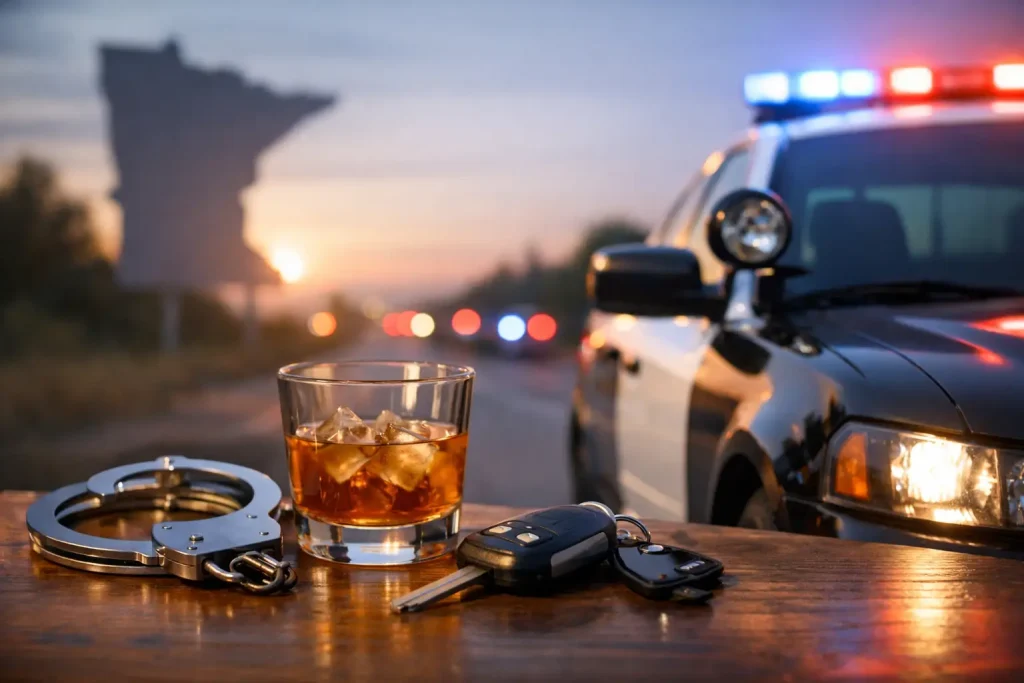
A roadside stop can turn frightening fast. An officer uses the word “DUI,” a booking sheet says “DWI,” and suddenly you are trying to understand whether those terms mean different charges, different penalties, or a different path forward. When people search for DWI versus DUI Minnesota, they usually need a clear answer quickly: Minnesota law generally calls the offense DWI, but the consequences can reach far beyond a label.
DWI Versus DUI in Minnesota: Is There a Difference?
In ordinary conversation, DUI means driving under the influence and DWI means driving while impaired. Many states use one term or the other, and some distinguish between them. Minnesota does not usually treat DUI as a separate criminal charge. The charge under Minnesota law is typically DWI, short for driving while impaired.
That means a police officer, employer, family member, or news report may say DUI, but the criminal complaint and license paperwork will generally refer to DWI. Do not assume the use of “DUI” means the allegation is less serious, or that “DWI” means the state has already proved impairment. The real questions are what the state claims happened, what evidence it has, and whether police followed the law in obtaining it.
A DWI allegation is not limited to alcohol. Minnesota can pursue impaired-driving cases involving cannabis, prescription medication, illegal drugs, or a combination of substances. The state may also claim a driver was impaired even when a test result is below the usual alcohol limit, or when no reliable chemical-test result exists.
What Can Lead to a Minnesota DWI Charge?
Minnesota prosecutors have several ways to try to prove a DWI case. The familiar route is an alcohol concentration of .08 or more within two hours of driving. This is often called a “per se” DWI allegation because the state relies on the reported test result rather than solely on observations of impaired driving.
But .08 is not the only issue. A person may be charged if the state alleges alcohol, a controlled substance, or another substance affected their ability to drive safely. Officers may point to driving conduct, speech, balance, admissions, field sobriety tests, the odor of alcohol, or physical observations. Those facts can be challenged. Nervousness, fatigue, medical conditions, injuries, weather, roadside conditions, and flawed instructions can all affect what an officer believes they saw.
Drug and cannabis cases require special care. There is no simple THC number that automatically establishes impairment in the same way an alcohol concentration of .08 can support an alcohol DWI allegation. Cannabis can remain detectable after its impairing effects have passed. Prescription medications can be lawfully prescribed yet still become part of an officer’s impairment theory. In these cases, the state must connect its evidence to actual impairment, and that connection is often far less straightforward than it first appears.
Minnesota also has separate concerns for certain drivers. Commercial drivers can face serious consequences at a lower alcohol concentration while operating a commercial vehicle. Drivers under 21 may face license consequences under Minnesota’s zero-tolerance laws for alcohol use and driving. The facts, driving status, prior history, and type of test matter.
One Arrest Can Create Two Different Battles
A Minnesota DWI arrest can trigger both a criminal case and an administrative driver’s-license revocation. These are related, but they are not the same proceeding.
The criminal case is where the state seeks a conviction and criminal penalties. Depending on the circumstances, a DWI can be charged as a misdemeanor, gross misdemeanor, or felony. Prior qualified impaired-driving incidents, a high reported alcohol concentration, a child in the vehicle, prior convictions, and other allegations may dramatically raise the stakes.
The license case can move with alarming speed. A reported test failure, test refusal allegation, or certain other circumstances can lead to revocation of driving privileges. Losing the ability to drive can threaten work, child-care obligations, medical appointments, and family stability before the criminal case is resolved.
There is a critical deadline. In many Minnesota implied-consent cases, a driver has 60 days from receiving the notice of revocation to file a petition for judicial review. Missing that window can eliminate an important opportunity to challenge the revocation. A criminal case may remain pending, but the license fight has its own clock. Treat the notice seriously and preserve it.
Chemical Test Refusal Is Not a Safe Shortcut
Drivers often believe refusing a breath, blood, or urine test will leave the state without evidence. That is not necessarily true. Minnesota can charge test refusal as a separate offense in appropriate circumstances, and officers may still rely on their observations, body-camera footage, squad video, statements, warrants, and other evidence.
At the same time, refusal cases involve constitutional and procedural questions that deserve close scrutiny. What did the officer say? Was the implied-consent advisory read correctly? Did police honor the right to consult with an attorney when applicable? Was a warrant obtained for a blood or urine test? Did the officer have a lawful basis for the stop and arrest?
There is no universal answer to whether a person should submit to a test. The right decision depends on the moment, and the legal consequences can be substantial either way. If the event has already happened, the focus should shift from second-guessing yourself to protecting the evidence, your license, and your defense.
The Stop and Investigation May Be Defensible
A DWI accusation is not a conviction. The state must prove its case, and law enforcement does not get a free pass because impaired driving is a serious public-safety concern.
A defense may begin with the traffic stop itself. Police need a lawful basis to stop a vehicle unless a recognized exception applies. A vague claim of weaving, an equipment issue, or an anonymous report may need to be examined against video and dispatch records. If the stop was unlawful, evidence obtained afterward may be subject to challenge.
The arrest also matters. Officers need probable cause before making an arrest or demanding certain testing. Field sobriety exercises are not infallible. Breath-testing instruments require proper operation and maintenance. Blood samples require reliable collection and laboratory handling. A reported result is evidence, not the end of the analysis.
Statements can also become central. People under stress often try to be cooperative and explain themselves. An innocent remark about having “a couple drinks,” taking medication, or using cannabis earlier in the week can be taken out of context. Remain silent about the facts of the stop until you have legal advice. Do not try to talk your way out of the situation after the fact through texts, social media, or calls that may be recorded.
What to Do After a DWI or “DUI” Arrest
The first hours and days matter. Save every document you received, including the citation, temporary license paperwork, notice of revocation, and property receipt. Write down what you remember while details are fresh: why you were stopped, what the officer said, when you last consumed alcohol or used medication, what tests were requested, and whether you asked to speak with counsel.
Do not miss court dates or the license-review deadline. Do not drive if your privileges have been revoked unless you have confirmed that you are legally authorized to do so. A new driving offense can deepen an already difficult case.
Then get a case-specific legal assessment promptly. An experienced defense lawyer can obtain reports and video, examine test procedures, identify parallel license issues, and assess whether the state can prove impairment or a valid test result. Early action is not about panic. It is about building a shield before evidence disappears and deadlines close.
A DWI charge can make you feel as if your freedom, reputation, and future are already decided. They are not. Get clear advice, protect your right to drive where possible, and make the state prove every part of its case. Refuge Defense stands ready to be a stronghold when the legal storm arrives.
To clarify, if you fail to submit to a chemical test when police alleged to have probably cause, that is a crime and gross misdemeanor test refusal charges are likely to be added. This carries in most cases more serious jail time, and fines. It also has a longer civil revocation period.
Pingback: Felony Versus Gross Misdemeanor in Minnesota – Refuge Defense