
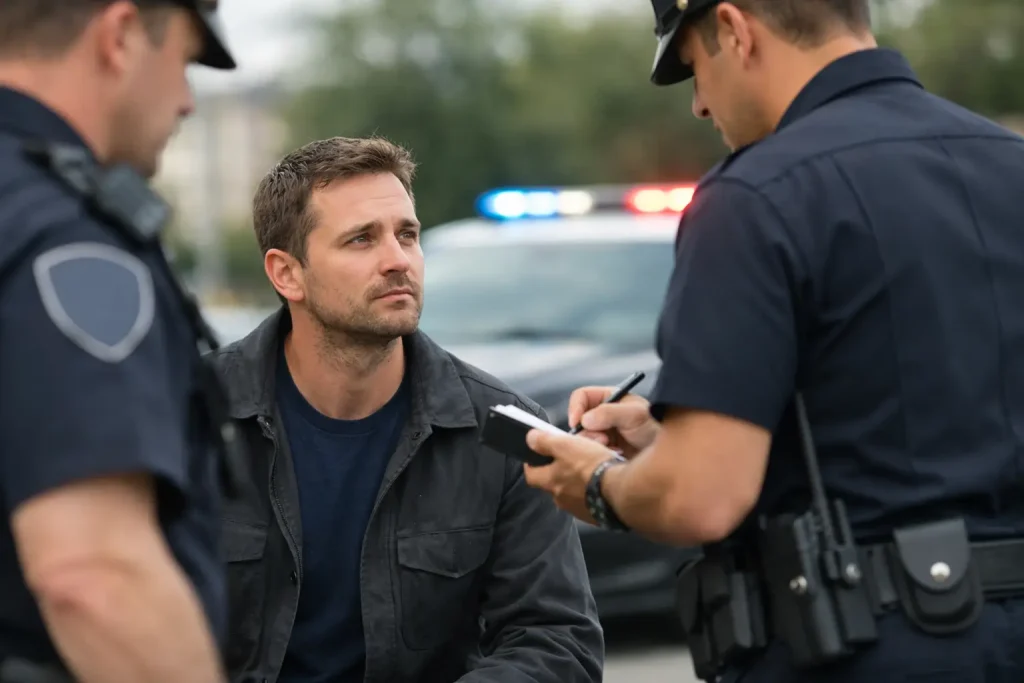
A police officer asks, “Do you know why I stopped you?” or “Where were you tonight?” Your pulse rises, and the instinct to explain can be overwhelming. But when you are under suspicion, every extra sentence can become part of the case against you. Knowing how to respond police questioning can protect your freedom, license, career, family, and future.
The central rule is simple: be calm, be respectful, and do not answer investigative questions without a lawyer. You do not need to argue with an officer to protect your rights. In fact, a composed and clear request for counsel is often far more powerful than trying to talk your way out of a difficult situation.
Start With Safety and Respect
Whether the encounter happens during a Minneapolis traffic stop, outside a Saint Paul bar, at your front door, or after an arrest, do not physically resist, run, threaten anyone, or interfere with police activity. Those choices can create separate charges and put you in greater danger.
Keep your hands visible. Speak in an even voice. Follow lawful instructions about where to stand, whether to exit a vehicle, or how to position your hands. Respectful conduct is not an admission of guilt. It is a way to keep a tense encounter from escalating while preserving the defenses available to you.
You should also avoid lying. A false statement can damage your credibility and may expose you to additional legal consequences. Silence is usually safer than a story you feel pressured to create in the moment.
How to Respond to Police Questioning: Use Clear Words
Police may use conversation to gather information before they ever accuse you of a crime. An officer may sound friendly, sympathetic, casual, or certain that they already know what happened. None of that means you should explain yourself.
If you are asked questions about a possible offense, you can say: “I am invoking my right to remain silent. I want to speak with a lawyer.” Then stop talking about the facts.
Be direct. Statements such as “Maybe I should have a lawyer” or “I do not think I should say anything” can create confusion. A clear request makes your position known. Once you have invoked your rights, do not resume discussing the allegations simply because an officer asks again, promises leniency, or says a lawyer will make things worse.
Police officers are trained to investigate. They may ask the same question in several forms, suggest that a co-worker or family member blamed you, or say they just need your side of the story. These tactics can be effective because people naturally want to correct a false accusation. But an interview is not a private conversation. It is an evidence-gathering event.
Know the Difference Between Identification and Investigation
During a traffic stop, Minnesota drivers generally must provide their driver’s license and proof of insurance when lawfully required. Provide the basic documents requested. Do not reach suddenly into a glove box, purse, or pocket without telling the officer what you are doing.
That does not mean you must answer broad investigative questions. “Where are you coming from?” “Have you had anything to drink?” “Whose pills are these?” and “Who else was in the car?” are questions that can lead to admissions or inconsistencies.
You can respectfully ask, “Am I free to leave?” If the answer is yes, leave calmly. If the answer is no, do not turn the encounter into a roadside legal debate. State that you wish to remain silent and want counsel, then preserve the issue for your attorney to evaluate later.
Do not consent to a search simply because an officer asks. You may say, “I do not consent to any searches.” Police can sometimes search without consent based on a warrant, probable cause, arrest, or another legal exception. Your refusal does not physically stop a search, and you should never interfere. It does, however, make clear that you did not voluntarily agree.
If You Are Arrested, Do Not Try to Explain It Away
After an arrest, officers may continue questioning you in a squad car, at a station, while collecting property, or during what sounds like casual conversation. The pressure can increase when you are tired, frightened, handcuffed, or separated from family.
This is the moment to hold your line. Repeat: “I want a lawyer. I will not answer questions.” Do not discuss the alleged incident with other people in jail, over recorded jail phones, in texts, or on social media. A cellmate may be looking for information. Calls are often recorded. A frustrated post can become an exhibit.
Miranda warnings matter, but do not wait for an officer to read them before protecting yourself. Miranda generally applies to custodial interrogation, not every interaction with law enforcement. Whether warnings were required is a legal issue that depends on the facts. Your practical protection is the same: clearly invoke your rights and do not provide a statement.
DWI Questions Require Special Care
A DWI stop in Minnesota presents immediate choices that can affect both a criminal case and your driving privileges. Officers may ask how much you drank, when you last used cannabis, whether you take prescription medication, or whether you feel impaired. You do not have to build the state’s case by answering these investigative questions.
Field sobriety tests and preliminary breath testing raise separate issues. The consequences of refusing, performing, or agreeing to testing can depend on the test, the circumstances, and the law in effect at the time. Do not make a snap decision based on something you read online or advice from a friend whose case was different.
After an arrest, Minnesota’s implied-consent process may involve a request for a breath, blood, or urine test. The decision can carry serious consequences, including potential license revocation and, in some circumstances, criminal exposure for refusal. You may have a limited right to consult with an attorney before deciding, so ask to speak with a lawyer immediately and use that opportunity wisely.
Time matters after a DWI-related license revocation. In many situations, there is a 60-day deadline to seek judicial review. Missing that deadline can close off a critical opportunity to challenge the revocation. Even if you believe you “failed” a test, the stop, arrest, advisory, testing procedure, and evidence may still need close examination.
What Not to Do Under Pressure
The most damaging statements are often not dramatic confessions. They are small attempts to sound reasonable: “I only had two drinks.” “I shoved him, but he started it.” “The gun is not mine.” “I did not know the bag was there.” These statements may seem helpful, yet they can supply the prosecution with facts it could not otherwise prove.
Avoid trying to negotiate your way out of the situation. An officer cannot promise a result that binds a prosecutor or judge. Avoid consenting to a phone search, offering passwords, deleting messages, or asking someone else to delete evidence. Destruction or concealment can make an already serious situation far worse.
Also resist the urge to contact an alleged victim, witness, or protected person to “clear things up.” In domestic violence, harassment, and protective-order matters, contact can lead to new allegations or violations, even when your intentions are peaceful. Let your lawyer assess the restrictions and communicate through lawful channels when necessary.
Write Down What You Remember for Your Defense
Once you are safe and able to do so, record the details for your attorney. Include the time and location of the stop or encounter, what officers said, who was present, whether body cameras or other cameras may exist, what tests were requested, and whether you asked for a lawyer. Save relevant texts, photos, receipts, medical records, and names of potential witnesses.
Do not edit, alter, or post the material publicly. A private, accurate timeline can help counsel identify inconsistencies, locate evidence before it disappears, and challenge an unlawful search, unreliable test, or misleading police narrative.
Get Counsel Before the Story Hardens
The state begins building its version of events quickly. Reports are written, recordings are reviewed, witnesses are contacted, and charging decisions may follow. Early legal advice can help you avoid preventable mistakes and protect evidence that may support your defense.
A Minnesota criminal defense attorney can examine whether police had a lawful basis for the stop, whether questioning crossed constitutional lines, whether a search was valid, and whether the government can actually prove its allegations. For DWI cases, counsel can also assess the separate threat to your license and the deadlines attached to it.
You do not have to face the legal storm by yourself. Refuge Defense approaches every case as a fight to protect the person behind the accusation – your rights, your record, your family stability, and your future. When police questioning begins, let your calm, clear words be your first shield: “I want to remain silent. I want a lawyer.”
Pingback: How to Challenge Breath Test Results in Minnesota – Refuge Defense
Pingback: Felony Sentencing Guidelines Minnesota Explained – Refuge Defense