
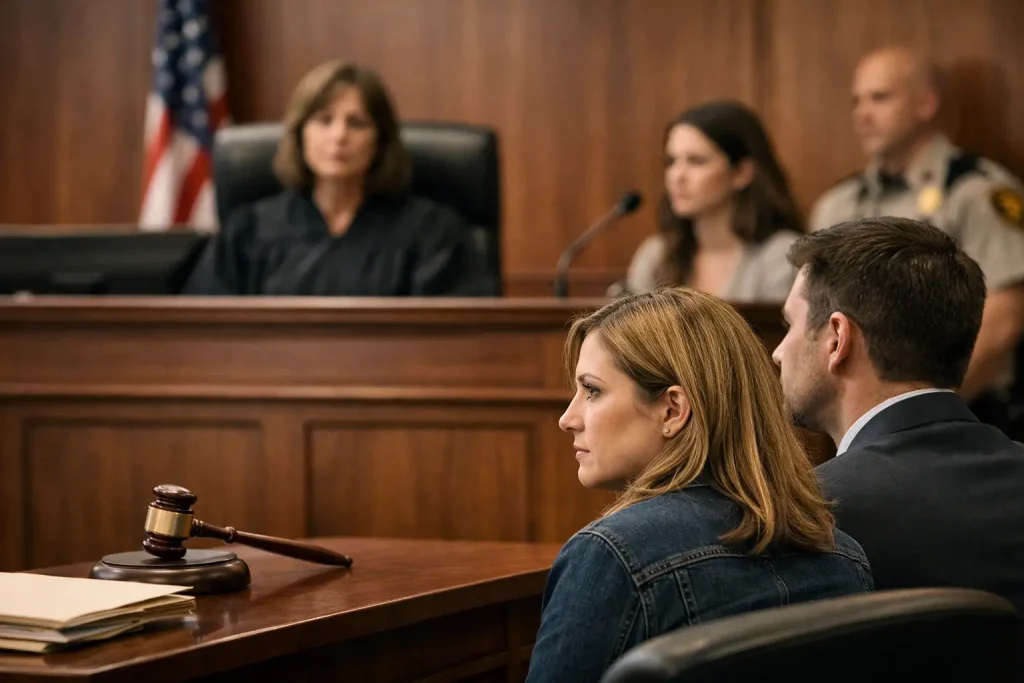
A Minnesota order for protection hearing is not a minor court date to put off or handle casually. The judge may make decisions that affect where you can live, whether you can see your children, your ability to possess firearms, and how others view you in a background check. If related criminal allegations are pending, what happens in this civil hearing can also shape the larger legal storm around you.
Whether you requested protection or were served with an Order for Protection, the hearing is a moment to bring facts into focus. Preparation matters. So does understanding what the court can decide and what you should not do before you walk into the courtroom.
What an Order for Protection Hearing Decides
In Minnesota, an Order for Protection, often called an OFP, is available in cases involving alleged domestic abuse between family or household members. The court may consider allegations of physical harm, fear of imminent physical harm, certain threats, criminal sexual conduct, or interference with an emergency call.
At the hearing, the petitioner asks the court to issue, continue, or extend protective relief. The respondent has an opportunity to challenge the allegations, present evidence, question witnesses through the legal process, and explain why the requested order should not be granted or should be narrower.
This is a civil proceeding, not a criminal trial. The petitioner generally must prove the alleged domestic abuse by a preponderance of the evidence. In plain terms, the judge decides whether the allegations are more likely true than not. That lower burden does not make the outcome harmless. A long-term OFP can carry serious practical and legal consequences.
The court may order no contact, require one party to stay away from a home, workplace, or school, award temporary use of a shared residence, address custody and parenting time, or order other relief allowed under Minnesota law. A hearing can also determine whether an existing emergency, or ex parte, order remains in place.
Do Not Ignore an Ex Parte Order
Many people first learn about an OFP when they are served with paperwork containing an ex parte order. This is a temporary order issued before a full hearing, based on the petition and affidavit submitted to the court. It can take effect immediately.
Read every page. The order may prohibit direct and indirect contact, require you to leave a residence, restrict access to specific places, or include firearm-related provisions. Even if you believe the accusations are false, exaggerated, or missing key context, follow the order exactly until a judge changes it.
That means no calls, texts, social-media messages, emails, gifts, third-party messages, or “accidental” contact. Do not ask a friend, relative, or child to carry a message. Do not respond because the other person contacts you first. An OFP violation can lead to arrest and criminal charges. The order is the boundary, not your view of whether it is fair.
The paperwork should identify the hearing date or explain how to request one. Minnesota deadlines can be short, and the timing may depend on the type of order and the relief it provides. Do not assume a hearing will be scheduled automatically or that you have time to wait. Preserve the papers, note service dates, and get legal advice promptly.
What Evidence Can Matter at an OFP Hearing
An OFP case often turns on details that do not fit neatly into a petition. A single text message may have a different meaning when read with the full conversation. A 911 call may capture panic, but it may also reveal inconsistencies. A police report is not the same thing as a finding that an allegation happened.
Useful evidence depends on the facts. It may include complete text and social-media threads, call logs, photographs with reliable dates, video footage, location information, medical records, witness testimony, prior communications about parenting or housing, and records showing what happened before and after the claimed incident.
Context is a shield. If you are accused of making threats, preserve the entire exchange rather than only the messages that seem favorable. If the dispute involves a shared home or child exchanges, identify neutral witnesses, calendars, messages, and records that establish the actual timeline. Do not edit screenshots, alter files, or try to create evidence after the fact. Credibility is often the center of the hearing, and a questionable document can damage an otherwise strong defense.
A petitioner may testify. The respondent may testify as well, but that decision deserves careful thought when the same events are being investigated by police or prosecutors. Statements made in an OFP proceeding can create problems in a later criminal case. The right approach is not always to tell the whole story immediately from the witness stand.
When Criminal Charges Are Also Possible
A domestic abuse allegation can produce two separate tracks: an OFP case in family court and a criminal investigation or prosecution. They may arise from the same event, but they have different rules, burdens of proof, and consequences.
The dangerous mistake is treating the OFP hearing as a chance to explain everything to the police, prosecutor, court, or petitioner. Remain silent about alleged criminal conduct unless and until you have received specific legal advice. A well-intended explanation can become an admission, expose inconsistencies, or give the state a road map for building its case.
This does not mean doing nothing. It means acting with discipline. A defense strategy may involve seeking a continuance when appropriate, protecting Fifth Amendment rights, challenging unreliable claims, identifying evidence that contradicts the petition, and deciding whether testimony helps or hurts the larger case. There is no one-size-fits-all answer. The right path depends on the allegations, the available evidence, the terms of the requested order, and any pending criminal exposure.
What to Expect in the Courtroom
OFP hearings are often brief, but the stakes are not. The judge may review the petition, hear testimony from one or both sides, receive exhibits, and ask questions. Some hearings are resolved by agreement, while others require contested testimony and a ruling from the bench.
Arrive early, dress respectfully, and bring organized copies of documents or exhibits. Do not interrupt the petitioner, argue with the judge, make faces, or attempt to communicate with the other party in the hallway. Your composure matters. Courts are evaluating not only documents and testimony but also whether each person appears capable of following boundaries.
If you have an attorney, review the theory of your case before the hearing. Know the specific allegations being challenged, the key documents, the witnesses who matter, and the risks of your own testimony. If you do not have counsel, ask the court about procedure when needed, but do not expect the judge to develop your defense for you.
The Consequences Can Reach Beyond the Courtroom
An OFP may affect housing, employment, professional licenses, security clearances, parenting arrangements, immigration concerns, and firearm rights. Firearm restrictions can arise under Minnesota and federal law depending on the order’s terms and the process that led to it. Do not guess about whether you may keep, possess, transfer, or retrieve firearms. Obtain clear legal guidance and comply with every surrender or transfer requirement.
A protective order can also become a pressure point in a divorce, custody dispute, or criminal case. That does not mean every petition is tactical or false. It means the court must have accurate information before issuing relief that can reshape a family’s daily life.
For petitioners seeking safety, thorough preparation can help the court understand the danger and the protection needed. For respondents, a disciplined defense can prevent an allegation from becoming a permanent legal burden without a full and fair examination of the evidence.
The hearing may be fast, but your future deserves more than a rushed reaction. Preserve the facts, obey every current order, and get experienced counsel before a temporary crisis hardens into lasting consequences. Refuge Defense can provide a confidential evaluation for Minnesotans facing an OFP and related criminal allegations.