
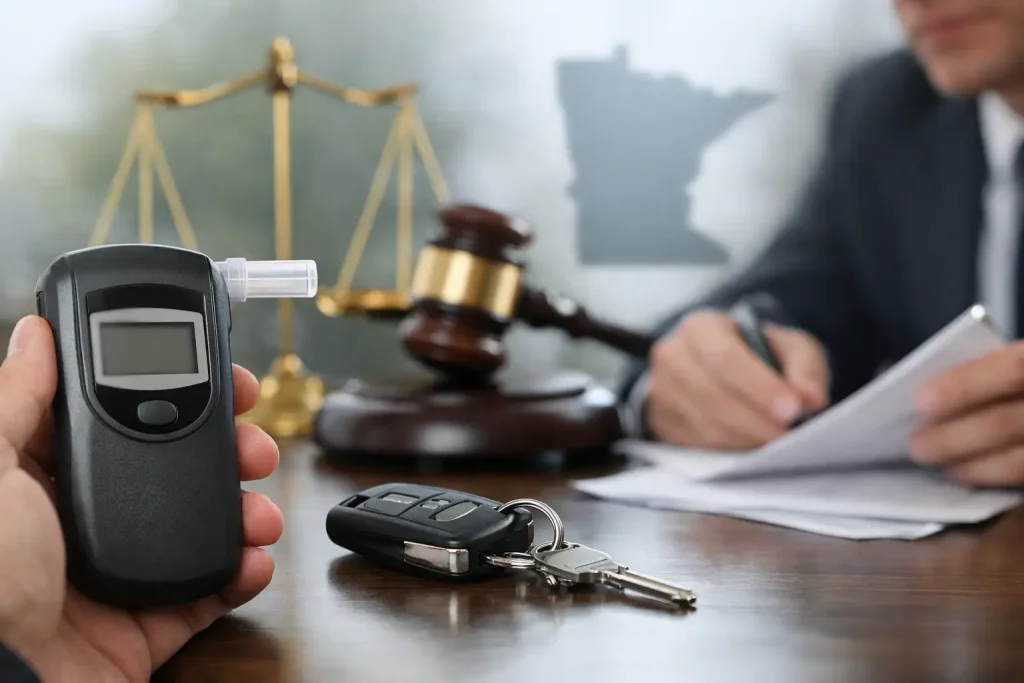
A breath-test number can feel like the whole case is already decided. It is not. If you are asking how to challenge breath test results after a Minnesota DWI arrest, the answer begins with this: the machine result is evidence, not a verdict. The state still must show that the stop, arrest, testing process, and use of that result complied with the law.
A strong defense does not depend on one magic argument. It requires a careful investigation of what happened from the first police contact through the final test. Your license, record, work, family stability, and freedom may be on the line. Move quickly and do not try to explain your way out of the case with police or prosecutors. Get legal advice before making further statements.
Breath Tests Are Not All the Same
Minnesota DWI cases may involve more than one kind of breath test, and the distinction matters. An officer may first request a preliminary breath test, often called a PBT, on the roadside. That device can help an officer decide whether there is probable cause to arrest, but its result generally is not used in the same way as the post-arrest evidentiary breath test.
After an arrest, an officer may read Minnesota’s implied-consent advisory and request a chemical test. An evidentiary breath test is commonly administered on an approved instrument at a police station, jail, or testing facility. That result can drive both the criminal DWI allegation and an immediate license revocation or cancellation issue.
A refusal to take the requested chemical test creates a separate and serious problem. Do not assume a refusal case cannot be defended, and do not assume a test result makes a defense impossible. The facts, the advisory, the officer’s conduct, and the documentation all deserve close review.
How to Challenge Breath Test Evidence
The most effective way to challenge breath test evidence is to examine the entire chain of events, not simply argue that the number seems wrong. A defense attorney can obtain reports, squad and body-camera footage, test records, calibration documentation, and other evidence that may reveal weaknesses in the state’s case.
Was the traffic stop lawful?
Police need a lawful basis to stop a vehicle unless a valid exception applies. Weaving, speeding, an equipment issue, or a traffic violation may provide a basis, but an officer’s hunch alone is not enough. Video can be critical here. It may confirm the officer’s account, or it may show that the claimed driving conduct was minor, misread, or never happened.
If the stop was unlawful, a lawyer may seek to suppress evidence gathered after it. That can affect field sobriety tests, statements, observations, and the eventual breath test. These arguments are fact-specific, and they must be raised through the proper legal process.
Did police have probable cause to arrest?
A lawful stop does not automatically justify an arrest. Before requesting an evidentiary chemical test, the officer generally must have probable cause to believe the driver was impaired. The state may point to driving, appearance, speech, odor, admissions, field tests, or a roadside PBT.
Those facts are not always as clear as a report suggests. Fatigue, anxiety, medical conditions, injury, winter weather, uneven pavement, and a person’s natural speech or balance can affect roadside observations. Body-camera footage often provides a more reliable picture than a brief written narrative prepared after an arrest.
Was the testing procedure followed?
Breath-testing instruments are regulated, and operators must follow required procedures. A defense review may focus on whether the instrument was properly maintained and checked, whether the operator followed the approved sequence, and whether the test record contains irregularities.
The observation period before the test can be especially significant. Officers are expected to watch for issues that can interfere with an accurate breath sample, such as recent drinking, vomiting, burping, chewing tobacco, gum, or another foreign substance in the mouth. These facts do not automatically erase a test result. But when the process was not properly observed or documented, the reliability of the result may be open to attack.
Could the result be unreliable for this driver?
Breath testing estimates alcohol concentration through a breath sample. It is not a direct blood test. Certain physiological conditions may affect the reading or raise questions worth investigating. Gastroesophageal reflux, recent regurgitation, mouth alcohol, breathing patterns, and some medical issues can matter depending on the circumstances.
This is not a shortcut defense. A medical explanation needs support, and courts will expect more than speculation. Still, a knowledgeable defense team will not simply accept a machine number without asking whether the result accurately reflected alcohol concentration at the relevant time.
Did the implied-consent process protect your rights?
Minnesota’s implied-consent process has its own rules and constitutional questions. What the officer said, what you asked, whether you were given a meaningful opportunity to consult with counsel when required, and how the test request unfolded can all matter.
Do not try to reconstruct these details from memory alone. Preserve paperwork, write down what you remember while it is fresh, and tell your attorney whether you asked to speak with a lawyer, made calls, had trouble reaching anyone, or felt pressured or confused. Small details can become significant when a case is challenged in court.
A Breath-Test Challenge Also Protects Your License
For many Minnesota drivers, the driver’s-license consequence begins before the criminal case is resolved. A test result of .08 or higher, a refusal allegation, or certain aggravating circumstances can trigger revocation, cancellation, plate impoundment, or vehicle-forfeiture concerns.
There is a limited window to seek judicial review of a license revocation. In many cases, the deadline is 60 days from receiving notice. Missing that deadline can mean losing an important opportunity to challenge the state’s action, even if the criminal case remains pending. The exact consequence and deadline can depend on your circumstances, so treat every notice as urgent.
A license challenge and the criminal charge are related, but they are not identical proceedings. Evidence developed in one can affect strategy in the other. That is why early, coordinated defense matters. Waiting until the first court date may leave less time to preserve video, inspect records, and respond to administrative consequences.
What to Do After a Minnesota Breath Test Arrest
Your next decisions matter. Keep every paper you received, including the citation, temporary license document, notice of revocation, test receipt, and vehicle-release paperwork. Write a private timeline of the stop: where you were driving, what the officer said, whether you performed field tests, what you consumed, any medical issues, and when the breath test occurred.
Do not post about the arrest, argue with law enforcement, or contact witnesses to compare stories. Do not drive if your privileges have been withdrawn unless you have confirmed you are legally authorized to do so. And do not assume pleading guilty is the fastest way to put the problem behind you. A DWI conviction or unresolved revocation can reach into employment, insurance, professional licensing, immigration status, custody matters, and future driving privileges.
An experienced Minnesota DWI defense lawyer can assess the actual evidence before deciding whether to seek suppression, challenge test reliability, negotiate, or prepare for trial. Refuge Defense approaches that work as a shield between a client and the full power of the state – with a focused review of the facts, not empty promises.
A breath-test result may be a serious obstacle, but it does not get the final word by itself. Act before deadlines close, protect your right to remain silent, and make sure someone examines every part of the state’s case before your future is decided.